“Late, partial and a diversion of attention”: Government decision to ban energy trading with Serbia criticized
The Kosovo Government’s decision to ban the purchase, sale, import and export of electricity with Serbian companies has prompted reactions and differing assessments from experts in the trade and energy sectors. The chair of the Chamber of Trade and Industry, Kushtrim Ahmeti, described the decision as late, while former Deputy Trade Minister Ismet Mulaj […]
The Kosovo Government’s decision to ban the purchase, sale, import and export of electricity with Serbian companies has prompted reactions and differing assessments from experts in the trade and energy sectors.
The chair of the Chamber of Trade and Industry, Kushtrim Ahmeti, described the decision as late; former Deputy Trade Minister Ismet Mulaj expressed doubts about its effectiveness, while energy expert Adhurim Haxhimusa assessed that the measure would not improve supply or lower electricity prices.
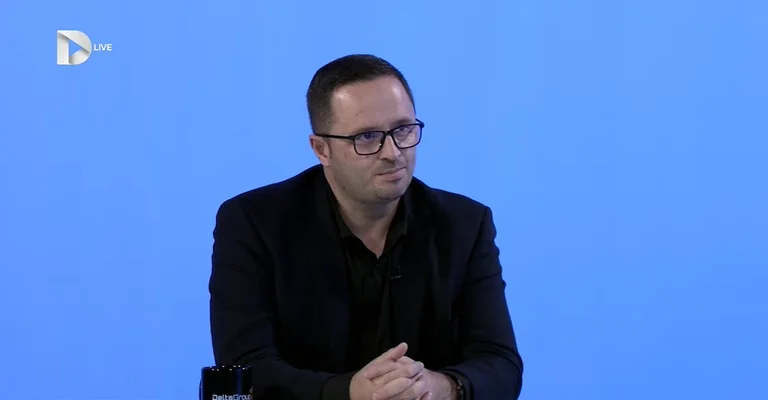
Speaking on TV Dukagjini’s FIVE, Ahmeti said that Serbia had been causing problems in the energy sector for years, despite Kosovo’s membership in the European Network of Transmission System Operators for Electricity (ENTSO-E).
According to him, such a measure should have been taken much earlier and accompanied by other actions against Serbia.
“As far as the energy aspect and the problems we have with Serbia are concerned, this is an extremely late decision. Serbia has been causing a lot of trouble for many years, despite our long-standing membership in ENTSO-E, or the European Network of Transmission System Operators for Electricity. This action should have been taken long ago, with a total blockade. Not only this, but a whole range of measures should have been taken,” Ahmeti said.
He assessed that experience from other processes had shown that Serbia does not respond without concrete measures, while also criticizing the European Union for its lack of willingness to intervene, despite problems having been evident for a long time.
Meanwhile, former Deputy Trade Minister Ismet Mulaj expressed reservations about how the decision would be implemented, saying it did not cover the entire territory of Kosovo.
Mulaj said he supported the principle of reciprocity in relations with Serbia and other states, but stressed that exempting the northern part called the measure’s effectiveness into question.
According to him, Elektroserver is a separate issue, as it supplies electricity to Serbian consumers in northern Kosovo.
“It is a political decision, perhaps also based on economic reasons. I have always supported the principle of reciprocity, not only with Serbia but with every state. Unfortunately, however, this decision does not cover the entire territory of Kosovo. In other words, the northern part is exempted, along with Elektroserver, which supplies Serbian consumers in the north. That is why I have serious doubts about it,” Mulaj said.
He said he supported putting pressure on Serbia, but assessed that the decision should be implemented throughout the entire territory, as its political and economic effects would be greater.
“I support putting pressure on Serbia, but this decision should have covered the entire territory. Naturally, the political and economic effects would have been greater, and the Government’s stated goal would have been achieved,” he stressed.
Energy expert Adhurim Haxhimusa was more critical of the decision’s impact on the energy sector. He assessed that banning trade with Serbian companies would neither solve supply problems nor affect electricity prices.
Haxhimusa also questioned the timing of the decision, suggesting that it was diverting attention from the energy sector’s internal problems.
“The question is, why now? I believe the Government is, in a way, when angry, taking it out on the saddle, while we are the horse. Because even if it imposes this ban, the electricity situation will not improve and prices will not fall. This is a kind of game to divert attention, but the problem is that six years—or nearly 18 years since the declaration of independence—we still do not have the megawatts needed to improve or guarantee a stable electricity supply. We do not have the megawatts for generation, nor do we have the transmission and distribution capacity to ensure a stable electricity supply,” Haxhimusa said.
The Kosovo Government approved the decision on Monday to ban the purchase, sale, import and export of electricity with Serbian companies, including trading through transit and resale in third countries.
Prime Minister Albin Kurti said the measure was a response to Serbia, which, according to him, has been blocking cross-border lines for electricity trading for six years. He warned that the measure could be escalated if there was no change from Serbia