Student List aims to revisit agreements with Kosovo, EU says Serbia must implement them
The Student List warns that it will review the constitutionality of the agreements reached in the Brussels dialogue. Pristina, meanwhile, says the normalization of relations begins with accepting reality.
“Kosovo is an independent and sovereign state and its independence is irreversible,” the Ministry of Foreign Affairs and Diaspora of Kosovo said in a response to Radio Free Europe (RFE/RL).
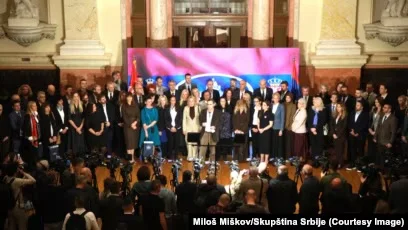
The Student List won the elections in Serbia, defeating the Serbian Progressive Party, which had been in power for 14 years.
In the section of its program devoted to national interests, the Student List says it will oppose Kosovo’s independence and will not allow it to join international organizations.
By accepting the Agreement on the path to normalization of relations in 2023, Serbia pledged that it would not oppose Kosovo’s membership in international organizations.
The parties also agreed on the plan for implementing the agreement. The agreement stipulates that Kosovo and Serbia will respect each other’s territorial integrity and recognize each other’s national symbols.
The Student List also warns that it will prosecute all “representatives responsible for the regime for all possible criminal offenses related to concluding and implementing unconstitutional agreements to the detriment of Serbia.”
What does the EU say?
The European Union, which mediates the dialogue between Pristina and Belgrade, says Serbia remains obliged to respect the commitments it made in the dialogue even after a change of government.
“The results of the parliamentary elections in Serbia do not change the foundations of the EU-mediated dialogue or the obligations undertaken by the parties,” an EU spokesperson said in a statement to RFE/RL following the Student List’s victory.
The EU expects Serbia to continue engaging constructively in the dialogue, fulfill its obligations and help normalize relations with Kosovo.
Belgrade still does not recognize Kosovo’s independence. Since the start of the dialogue in 2011, the parties have reached dozens of agreements on issues such as freedom of movement, the integration of the judiciary and police, electricity, telecommunications, the recognition of diplomas and the status of the Serb community in Kosovo.
What does Kosovo say?
Kosovo’s Ministry of Foreign Affairs and Diaspora told Radio Free Europe that full normalization of relations with Serbia can be achieved only if mutual recognition is at the center of the process.
“Only on this basis can European relations of good neighborliness be built. We remain committed to a dialogue that helps achieve this goal and enables the region to overcome repeated tensions and move toward lasting peace and sustained cooperation,” the Ministry said.
According to the Ministry, the Student List’s stance toward Kosovo could deepen the divisions that the dialogue aims to overcome.
“The Student List’s promise of Serbia’s political renewal sounds unconvincing when its program officially expresses the same territorial ambitions that characterized the previous government’s policy toward the Republic of Kosovo. They consider our country part of Serbia, explicitly define this as a political objective and promise to block our membership in international organizations,” the Ministry said in its response.
Petrov says reversing agreements Serbia has implemented is almost impossible
Vladan Petrov, president of Serbia’s Constitutional Court, said in a written response to Radio Free Europe that, in his view, it is almost impossible to restore the situation that existed before the implementation of the agreements Serbia reached with Kosovo.
Petrov, who emphasized that he was expressing his personal opinion, said Serbia would have a constitutional basis for unilaterally withdrawing from the dialogue only if the Constitutional Court changed its 2014 position and treated the agreements as international treaties.
In 2014, Serbia’s Constitutional Court rejected a request to review the constitutionality and legality of the First Brussels Agreement. The Court described that agreement as political, without the status of an international treaty.
“But, I repeat, whatever their nature, the Republic of Serbia has fully implemented them for a long time, so the question naturally arises as to what concrete consequences such a decision could have, even if we consider it hypothetically,” Petrov said.
After its election victory, representatives of the Student List called for the resignation of several institutional leaders, including Petrov.
What is the purpose of revisiting the agreements?
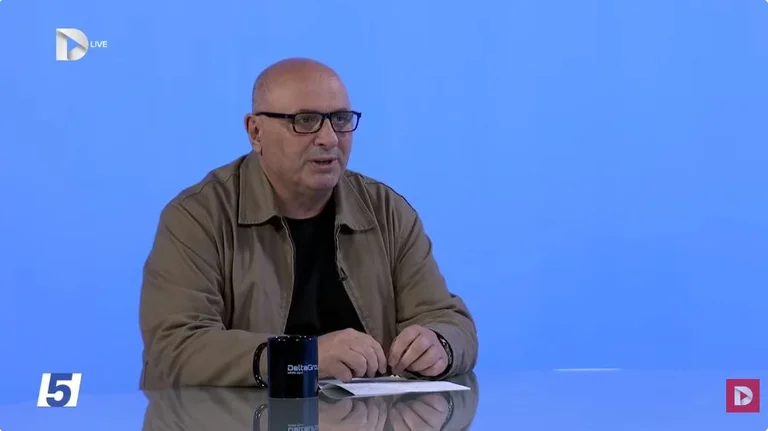
Bogoljub Milosavljević, a professor of constitutional law in Serbia, says it is still unclear how the Student List will revisit the agreements reached in the dialogue with Kosovo and what it aims to achieve by doing so.
“I do not believe any step would be taken that runs counter to the Student List’s goals and plans to move closer to the European Union. Revisiting [the agreements within the framework of the dialogue on normalizing relations with Kosovo] must have a purpose, because the previous government did all kinds of things,” he told RFE/RL.
Dušan Janjić, of the Belgrade Forum for Ethnic Relations, sees the warning about reviewing the constitutionality of the agreements as a call for partnership with the EU and for a minimum of respect. He does not expect the Student List to turn to Serbia’s Constitutional Court.
From a constitutional perspective, Janjić says a pause in the dialogue would serve Kosovo and Serbia by creating the conditions for partnership and for continuing the dialogue on a new basis.
“Let’s not rush. Let’s lay the foundations for continuing the dialogue,” Janjić said. According to him, the Constitutional Court’s 2014 decision remains in force, since no one can review it.
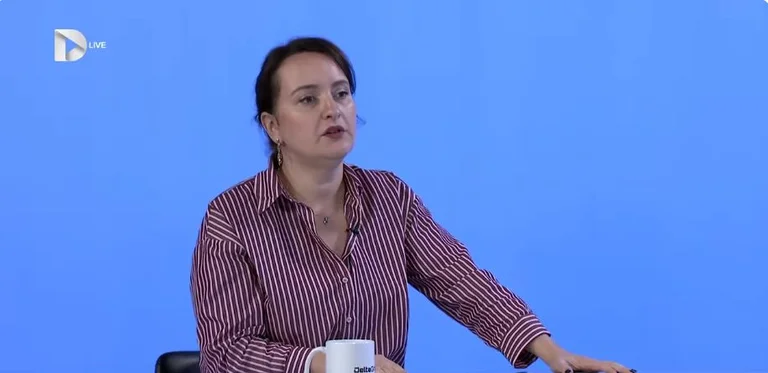
Artan Muhaxhiri, a political analyst from Pristina, describes the Student List’s stance toward Kosovo as a “populist narrative” that runs counter to Serbia’s goals of moving closer to the EU.
According to Muhaxhiri, the Student List has the opportunity to bring about “fundamental positive changes in Serbian society.”
But he says the List would squander this opportunity if it chose to “engage in an irrational battle, lost from the outset, to change history in the context of Kosovo.”
“The success of their progressive ideas for Serbia’s emancipatory political and sociocultural transformation will depend on how realistic their approach is to the most difficult and delicate processes. Relations with Kosovo should be among the main priorities,” he told RFE/RL.
Muhaxhiri sees the presidential elections in Serbia, which must be held by the end of the year, as the only explanation for the Student List’s stance toward Kosovo so far.
According to him, the dialogue cannot continue if the Student List does not change its approach toward Kosovo.