UBT Rector Prof. Dr. Edmond Hajrizi Participated as a Speaker at the COP31 World Climate Summit in Antalya
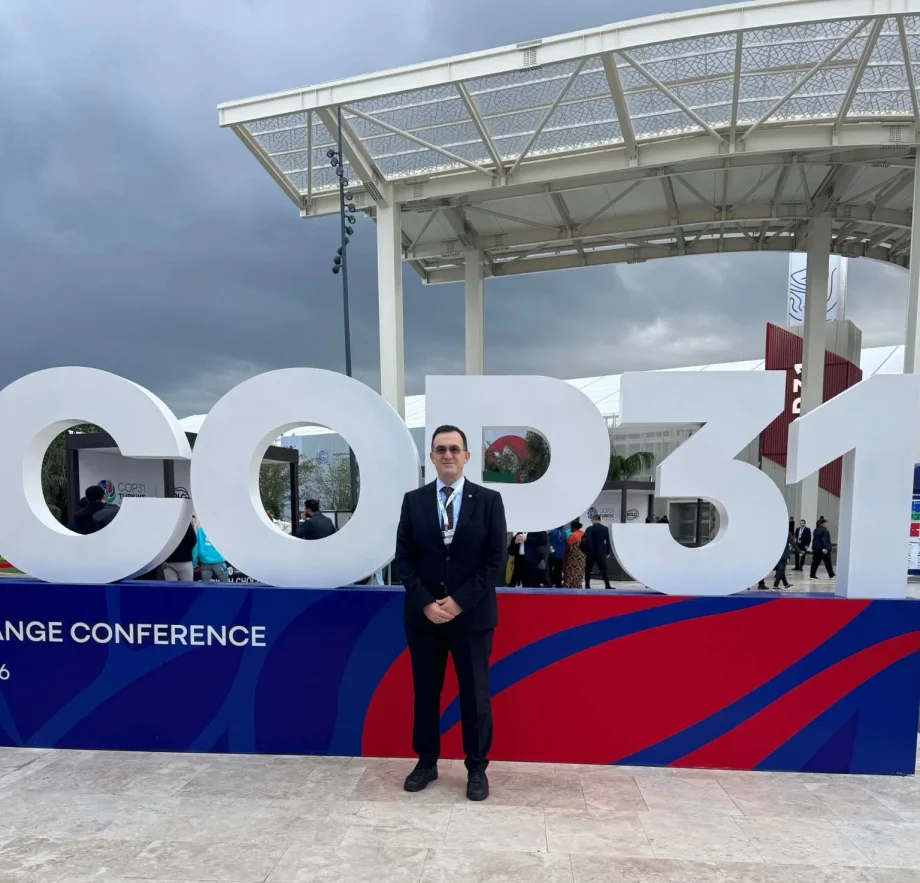
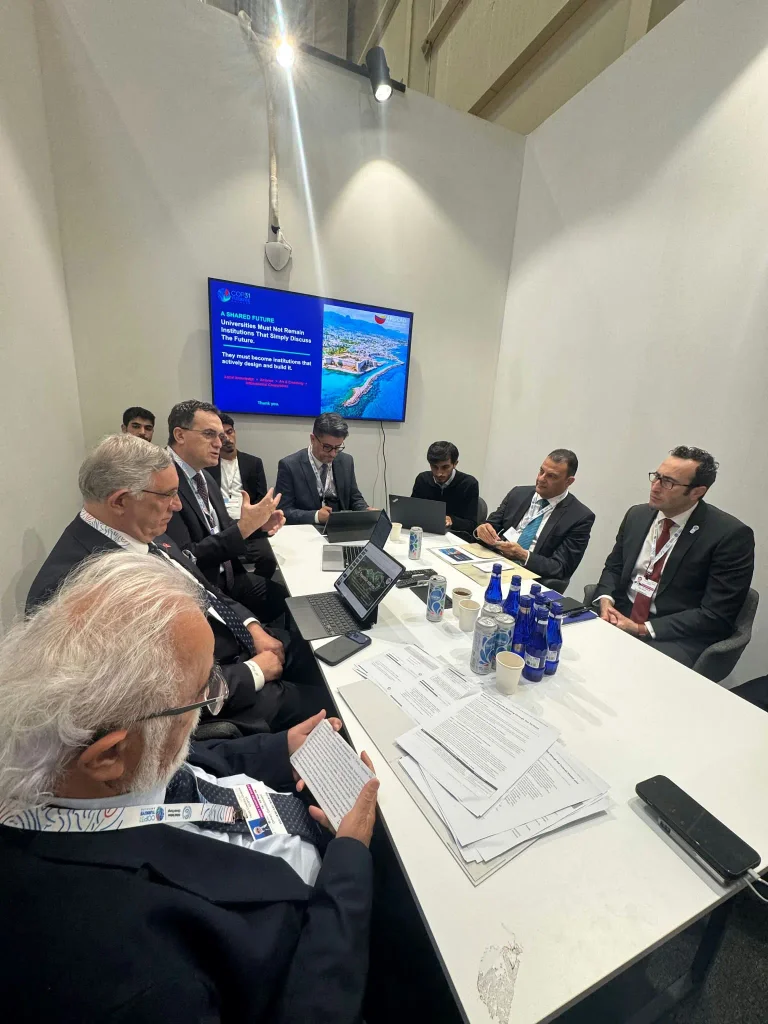
UBT, one of Kosovo’s leading higher education institutions, was represented at the international level at the United Nations Climate Change Conference (COP31), held in Antalya, Turkey. UBT Rector Prof. Dr. Edmond Hajrizi participated as a speaker on a high-level international panel, where the role of universities in addressing the global challenges of climate change was discussed.
On November 18, 2026, as part of COP31, the international panel entitled “From Universities to a Global Climate Alliance: Shared Vision and Action for Green Transition” was held in the Blue Zone in Antalya.
The panel was moderated by the Rector of Çanakkale Onsekiz Mart University and Chair of the Council of Higher Education of Turkey, Prof. Dr. Ramazan Cüneyt Erenoğlu, and featured a representative of the Turkish Cooperation and Coordination Agency (TİKA) and rectors of universities from various countries.
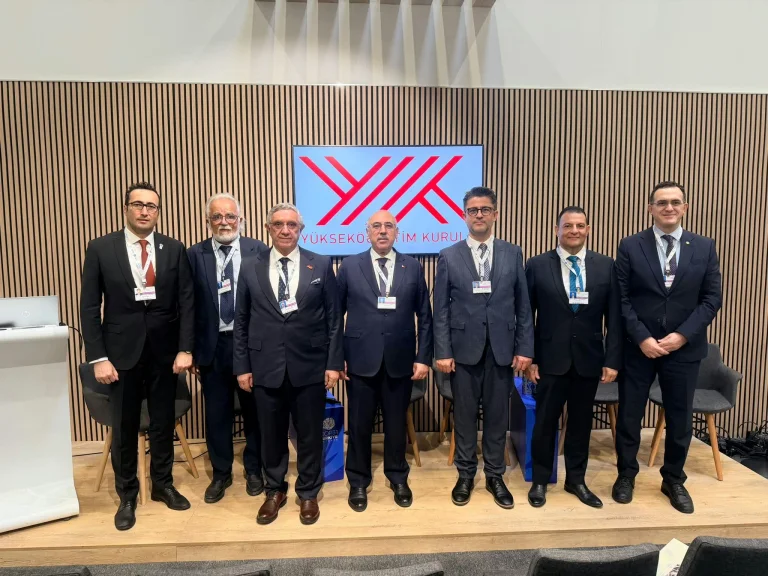
UBT’s vision for smart campuses and climate-resilient cities presented at COP31
As part of the panel, UBT Rector Prof. Dr. Edmond Hajrizi delivered a presentation entitled “From Smart Campuses to Climate-Resilient Cities: The 5S Approach to University Living Labs.”
The presentation addressed UBT’s vision for developing smart campuses and transforming them into sustainable models that can contribute to creating cities that are more resilient to climate change.
As part of the concept “UBT Smart City: Integrating Education, Research, Emerging Technologies and Climate Action,” the importance of bringing together education, scientific research, technological innovation, and concrete climate action within an integrated sustainable development model was emphasized.
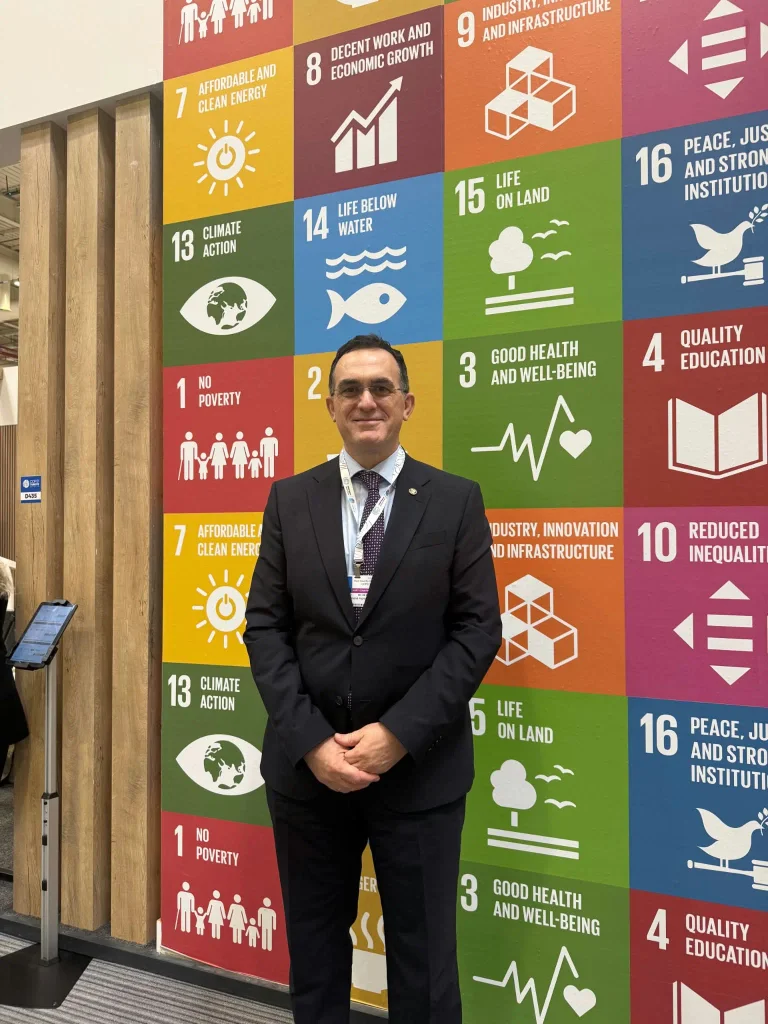
The UBT Smart City approach is based on the idea that university campuses should serve not only as centers of education and scientific research, but also as Living Labs, where sustainable technologies can be developed, tested, and turned into practical solutions for society.
Cooperation with TİKA and Çanakkale Onsekiz Mart University in the field of green transition
UBT’s representation at COP31 is also particularly significant in the context of the university’s ongoing international academic collaborations.
In 2024, UBT and Çanakkale Onsekiz Mart University signed an academic cooperation agreement, establishing the basis for developing joint initiatives in education, science, and sustainability.
Building on this cooperation, the Green Transformation Project was implemented at UBT with the support of the Turkish Cooperation and Coordination Agency (TİKA).
The project was carried out in cooperation with Çanakkale Onsekiz Mart University’s Green Transformation Coordination Office, with around 30 UBT students participating.
The project’s main objective was to develop young people’s knowledge and skills in green transformation, sustainable development, and environmental responsibility.
This cooperation is a concrete example of how scientific knowledge and international partnerships can be translated into educational activities and human capacity-building programs.
UBT continues to develop activities in the field of sustainability, not only through the concept of smart campuses, but also through scientific research and the development of innovative environmental technologies.
The university’s participation in the international UI GreenMetric World University Rankings reflects its institutional commitment to evaluating and improving performance in environmental sustainability and university campus management.
UBT has also developed research projects in environmental technologies, including a project aimed at producing activated carbon from agricultural waste and using it to remove pollutants from wastewater.
This scientific initiative is an important example of the university’s focus on the circular economy, sustainable use of natural resources, and development of environmentally friendly technologies.
An important step toward strengthening international academic cooperation
The international panel at COP31 discussed the responsibilities universities can assume in addressing climate change, transferring green technologies, advancing science diplomacy, and developing joint international projects.
UBT Rector Prof. Dr. Edmond Hajrizi’s participation as a speaker on this international panel represents an important opportunity to promote the university’s vision for sustainability, innovative technologies, and scientific cooperation on a global platform.
Through this representation, UBT demonstrates its commitment to contributing to international discussions on climate challenges and strengthening ties between higher education, scientific research, innovation, and sustainable development.
UBT remains committed to integrating education, science, technology, and international cooperation, with the aim of contributing to building a greener, more sustainable, and more climate-resilient future.