
El Niño’s impact: Rare tropical animals arrive in California
Last month, a bigeye fish was recorded in California for the first time, while sea turtles nested for the first time. Meanwhile, a venomous yellow-bellied sea snake came ashore, while whale sharks and hammerhead sharks are swimming not far from the coast. Visitors […]
Last month, a bigeye fish was recorded in California for the first time, while sea turtles nested for the first time.
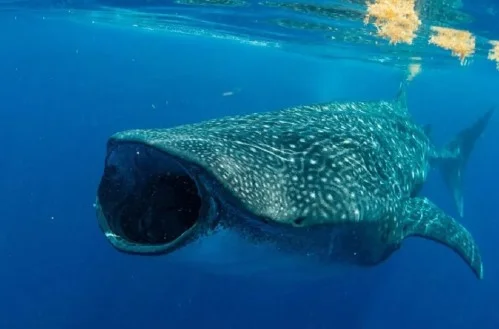
Meanwhile, a venomous yellow-bellied sea snake came ashore, while whale sharks and hammerhead sharks are swimming not far from the coast. Other visitors to California waters include flying fish and manta rays.
Exotic species have arrived along the California coast since the onset of the El Niño weather phenomenon, which is unusually strong this year. This natural phenomenon, which occurs every few years, brings warmer seawater from the south toward the north, transporting tropical species with it. They create stunning scenes along the California coast, scenes that are becoming increasingly visible thanks to drones and video recording.
Scientists expect conditions to return mostly to normal after El Niño, a natural phenomenon that existed even before human-caused climate change, passes next year. Experts believe the greatest short-term damage may affect kelp forests, which thrive in colder waters and serve as habitat for many species.
“This is positive for some shark species, but probably negative for others. The biggest problem is for animals that can’t move, right? Most sharks are highly mobile—they can simply move elsewhere,” said Chris Lowe, director of the Shark Lab at California State University, Long Beach.
The yellow-bellied sea snake has venomous fangs, but cannot swim like a large shark. When a snake that appeared ill came ashore in Orange County in September, a beachgoer used a palm frond to lift it from the sand and return it to the sea.
Jaros said that, based on the footage, he has almost no doubt that the animal is a yellow-bellied sea snake, known scientifically as Hydrophis platurus.
So far, only six or seven sightings of this species in California have been confirmed.
In September, two nests of Olive Ridley sea turtles were discovered on two beaches in Orange County. According to the U.S. National Oceanic and Atmospheric Administration, this is the first recorded case of any sea turtle species nesting on the U.S. West Coast. Officials said the first nest was discovered by a visitor at Seal Beach on September 16, while the second was found three days later by lifeguards at the neighboring Huntington Beach./KP














