Can Tesla’s flying car boost sales and shares?
Tesla unveiled the next-generation Roadster on Thursday in Texas, with one of the three new versions performing a spectacular stunt and demonstrating flight capabilities. However, analysts contacted by Euronews Business do not expect the model to generate significant revenue. Elon Musk, Tesla CEO and SpaceX co-founder, recreated […]
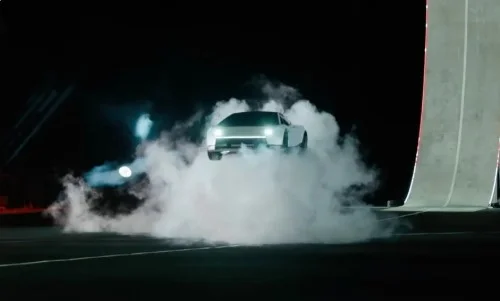
Tesla unveiled the next-generation Roadster on Thursday in Texas, with one of the three new versions performing a spectacular stunt and demonstrating flight capabilities. However, analysts contacted by Euronews Business do not expect the model to generate significant revenue.
Elon Musk, Tesla CEO and SpaceX co-founder, recreated a “Knight Rider” moment, showcasing the engineering capabilities of his companies with a supercar equipped with cold-gas thrusters developed using SpaceX technology.
Tesla’s share price rose on Friday, largely due to the extensive publicity, but while the demonstration impressed, analysts see limited commercial value in the new model, Euronews writes.
Mamta Valechha, consumer discretionary analyst at Quilter Cheviot, described it as an “attention-grabbing engineering moment” designed “to generate excitement around the brand”.
Rico Luman, senior transport and logistics sector economist at ING, called the unveiling “a publicity stunt that underscores Tesla’s image as an innovative company, offering brand value”, adding that cars are still about emotion and lifestyle, so the demonstration makes an impression.
Gene Munster, managing partner at Deepwater Asset Management, called the demonstration on X “an engineering flex with no commercial value beyond embarrassing traditional car manufacturers”.
Valechha noted that even Elon Musk had previously played down the potential financial impact of the Roadster. “The commercial value is likely to reinforce Tesla’s innovation narrative rather than generate meaningful profits.”
Musk said production is expected to begin in 2028. Tesla has opened reservations, although the Rocket flying version is available by invitation only. The company has not announced final sale prices.
The Roadster was unveiled in 2017 and a year later, Musk suggested that thrusters could allow it to fly. This was followed by repeated delays, after production was initially promised for 2020. “Reliability and execution risks remain high,” Valechha concluded.
Can flying cars reach a wider market?
The Roadster’s flying features have not been approved for use on public roads, adding another hurdle to any ambition for wider adoption of the technology, in addition to high production costs.
Luman said the flying car was designed as a specialized sports vehicle, but “larger-scale flying car activity will not be realistic in the foreseeable future, as the same airspace rules that apply to aircraft also apply, and in this case certification as an aircraft by EASA (in Europe) is required.
Whether the Roadster falls under aviation regulations depends on its design, capabilities and intended operation, the European Union Aviation Safety Agency (EASA) told Euronews Business.
The agency said it does not comment on “specific certification applications or activities involving individual manufacturers”.
However, “any vehicle intended to operate as an aircraft would need to meet the relevant aviation safety requirements”, the agency said. These may include pilot qualifications for the driver.
Luman added that, in addition to the complex rules that apply, airspace is already quite crowded, particularly with the increase in drone activity.
“A large number of uncontrolled flying cars would likely not be permitted by authorities for safety reasons.”
Valechha also sees limitations on the widespread use of the technology.
“Some technologies may filter into other vehicles over time, but flying or thruster-assisted features are unlikely to be economically viable for higher-volume cars in the foreseeable future because of cost, complexity and regulatory hurdles.”