“Everest of Diving”: Underwater Adventures on the Island of Kea, Where the Britannic, the Titanic’s Sister Ship, Is Explored
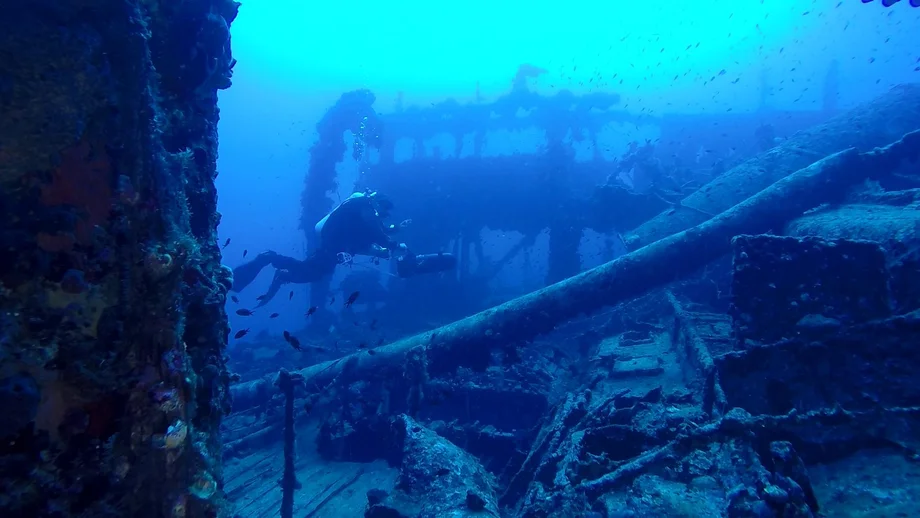
The Greek island of Kea is attracting the attention of tourists and diving enthusiasts thanks to the wrecks of three historic ships, including the Britannic, the Titanic’s sister ship, which lies around 120 meters beneath the sea’s surface.
In the depths of the Aegean Sea, near the Greek island of Kea, lies one of the world’s best-known shipwrecks: the Britannic, the Titanic’s sister ship, which is now considered one of the most challenging destinations for professional divers.
Sunk in November 1916 after hitting a German mine during the First World War, the Britannic lies at a depth of around 120 meters. It had been converted into a hospital ship to transport wounded British troops.
Despite improvements to its design following the Titanic disaster, the Britannic sank in just 55 minutes. Around 1,300 people were rescued, while 30 lost their lives, mainly because the lifeboats were launched prematurely while the ship’s propellers were still turning.
“The first feeling is amazement. The ship is enormous, and it is in very good condition,” Giannis Tzavelakos, owner of the Kea Divers diving center, told Euronews.
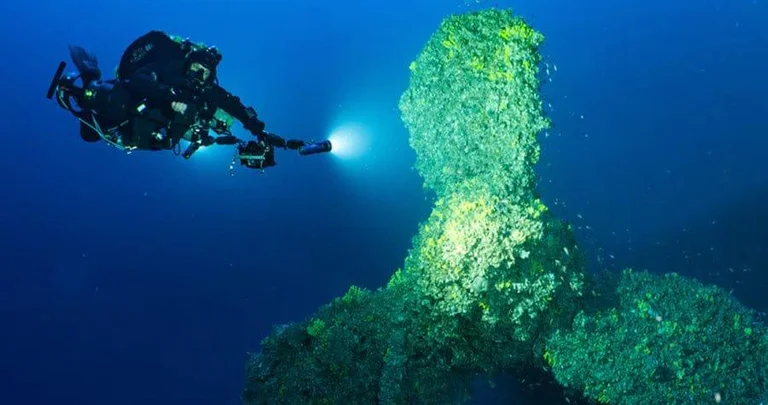
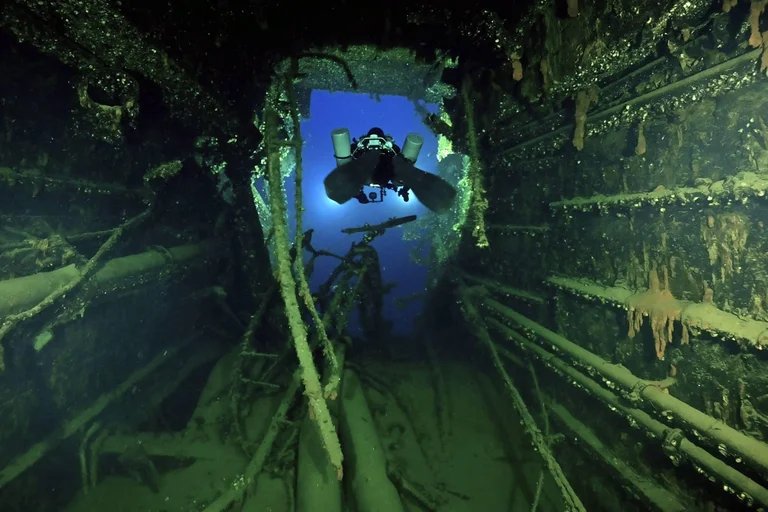
He describes the Britannic as an underwater museum, noting that many parts of the ship have been preserved in their original positions.
The wreck was discovered in 1975 by renowned French explorer Jacques-Yves Cousteau, while his team explored it for the first time a year later.
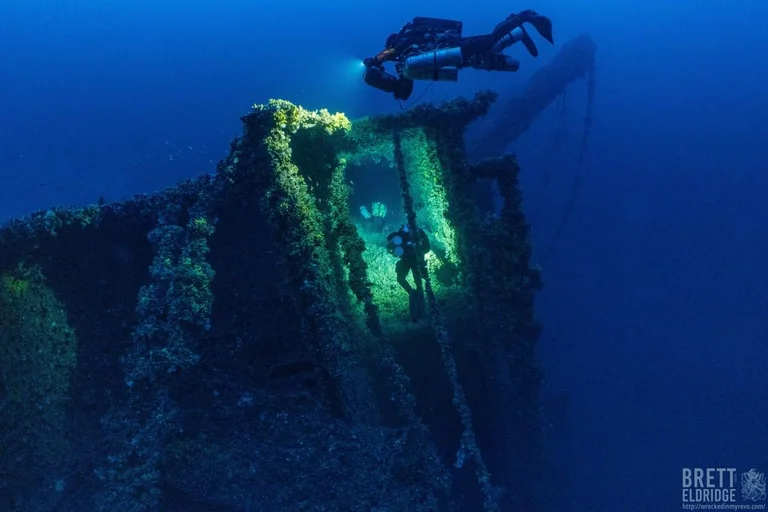
In addition to the Britannic, the waters around the island of Kea conceal two other historic ships, the Patris and the Burdigala, which together have turned the area into a unique destination for underwater tourism.
Diving near the Britannic is considered a high-level challenge and is suitable only for experienced divers with specialized training.
However, Kea offers more than underwater adventures. The island has around 81 kilometers of hiking trails, organized into 12 main routes that pass through forests, traditional villages, and coastal areas.
Another attraction is the famous Lion of Kea statue, a sculpture carved into rock dating back to the 6th century BC.
The combination of maritime history, nature, and active tourism is giving the island a distinctive tourist identity, making it an appealing destination for visitors seeking experiences beyond traditional summer tourism.