Fetoshi: The list that brought down Vučić in Serbia is merely an ‘alter ego’ of the Serb List
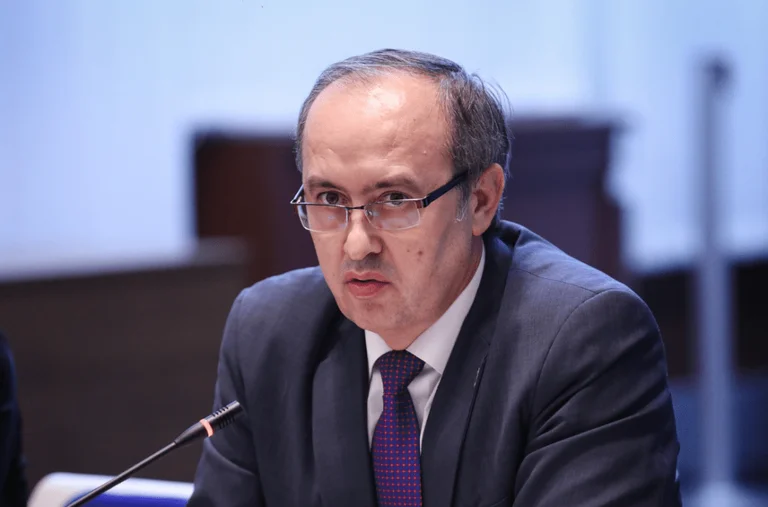
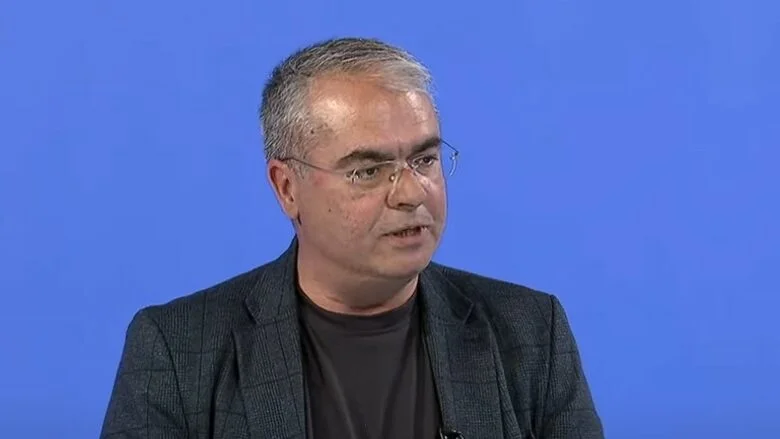
The director of the Octopus Institute, Arben Fetoshi, has assessed that Serbia’s Student List, despite its claims of seeking the country’s democratic transformation, does not represent a change in foreign policy orientation and continues the positions of previous governments led under the presidency of Aleksandar Vučić.
In an analysis published under the title “Serbia’s ‘Student’ Serb List – The geopolitical continuity of the new power in Belgrade”, Fetoshi says that this list’s positions on Kosovo, Russia, China, the European Union and the United States of America demonstrate the continuity of Serbia’s foreign policy.
“The political program of the Student List, with which it claims to seek the democratic transformation of Serbia, contains no change whatsoever in foreign policy orientations,” Fetoshi writes.
According to him, “military neutrality”, Kosovo as part of Serbia, rejecting sanctions against Russia, strategic partnership with China, economic partnership with the European Union and strategic dialogue with the US are the main commitments that show alignment with the programs of previous governments.
“Neutrality” as a façade for militarization
Analyzing the Student List’s program in the area of defense, Fetoshi notes that it pledges to maintain military neutrality, while at the same time providing for the modernization and expansion of the army’s capabilities.
He compares this approach with the programs of the governments of Miloš Vučević and Đuro Macut, assessing that military neutrality has served as cover for closer ties with Russia and China.
“The Student List, too, disguises itself with ‘strategic neutrality’, which so far has served as a ‘façade’ for militarization and closer ties with Russia and China,” Fetoshi writes.
He emphasizes that the program does not provide for a reduction in military strength, but rather increased investment and the creation of an integrated air-defense system with a range of up to 300 kilometers.
Kosovo continues to be treated as part of Serbia
Fetoshi assesses that alignment with previous policies is complete when it comes to the position on Kosovo as well.
The Student List’s program states: “We will fight to preserve Kosovo and Metohija as part of Serbia, in accordance with the Constitution and Resolution 1244. We will continue to oppose the unilaterally declared independence of the so-called Republic of Kosovo and will not allow it to join international organizations.”
According to Fetoshi, this position is consistent with the policies of previous governments, while the Student List goes even further in opposing the Brussels dialogue agreements.
“This means that the change of power in Serbia has not only failed to bring about a change in its position on Kosovo, but has hardened it with regard to the Brussels dialogue agreements,” he writes.
Fetoshi also highlights the list’s commitment to “prosecute regime representatives for any potential criminal offense related to the conclusion and implementation of unconstitutional agreements detrimental to Serbia”.
He also mentions the aim of granting the broadest possible autonomy to Serbian-majority municipalities and other settlements with Serbs and Gorani, as well as preserving educational, healthcare and social institutions, including the university in North Mitrovica.
Partnership with Russia and China remains unchanged
With regard to Russia, the Student List’s program provides for continuing the traditional partnership and opposing sanctions against Moscow.
“We will maintain the traditional partnership with Russia, in order to coordinate in the UN Security Council on preserving Serbia’s territorial integrity and resolving outstanding issues of mutual interest. Serbia will maintain its principled position of not imposing restrictive measures on Russia, while also respecting the territorial integrity of sovereign states, including Ukraine,” the program is quoted as saying in Fetoshi’s analysis.
He assesses that partnership with Moscow and rejection of sanctions are the two pillars of Serbian policy that confirm continuity with previous governments.
With China, too, the Student List provides for continuing the strategic partnership, with a focus on the economy, infrastructure and investment in high technology.
“We will develop the comprehensive partnership with China and, in future projects, insist on respect for environmental standards, workers’ rights and workplace safety,” the program states.
Fetoshi emphasizes that although the new program does not specify cooperation in the field of defense, it does not undermine the strategic relationship with China, built during Vučić’s presidency.
The EU as a “wallet”, not a strategic orientation
In his analysis, Fetoshi assesses that the Student List treats the European Union primarily as an economic partner and a source of funds and investment, rather than as a strategic goal of integration.
He describes this approach with the title “The EU as a ‘wallet’, not a strategic orientation”, emphasizing that the program also provides for organizing a referendum on membership in the European Union.
According to him, this further devalues European integration as Serbia’s strategic goal.
In this context, the program provides for deepening cooperation with the European Bank for Reconstruction and Development and the European Investment Bank, in order to secure grants and financial support for development projects.
Strategic dialogue with the US
As for relations with the United States of America, the Student List pledges to continue strategic dialogue in the fields of telecommunications, energy, transport, artificial intelligence, gas supply and defense cooperation.
Fetoshi says that this commitment, too, represents continuity with the policies of previous governments and does not signal a genuine geopolitical turn toward the West.
“Otherwise, potential rapprochement with the US or reforms that bring benefits from the EU would not be concerning if the Student List were signaling a geopolitical turn toward the West. Such a move would mean a chance for ‘normalization’ with Kosovo, putting an end to Serbia’s hybrid strategy of destabilization and international sabotage,” he writes.
In conclusion, Fetoshi describes the Student List as an “alter ego” of the Serb List in Kosovo, arguing that the change of power in Belgrade will not bring genuine democratization as long as Serbia’s revisionist ambitions in the Balkans continue.