Arlinda Zekaj had complained about her treatment by the police, QPS director reveals what she told her
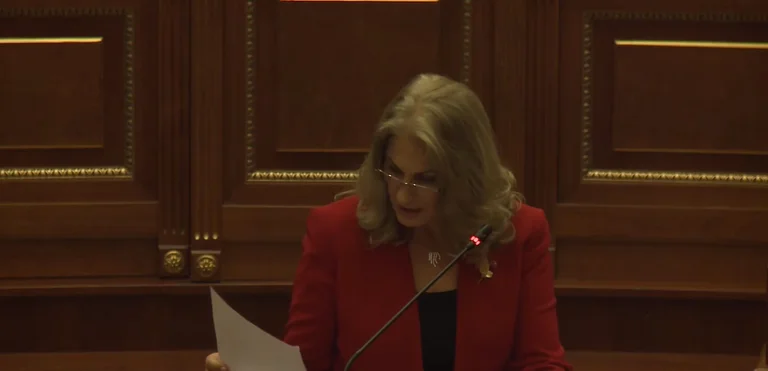
The Director of Social Welfare in the Municipality of Peja, Albulena Mujaj-Bajraktaraj, said she had no direct responsibility for handling cases of domestic violence, including the case of Arlinda Zekaj, who was killed in Vitomirica, Peja.
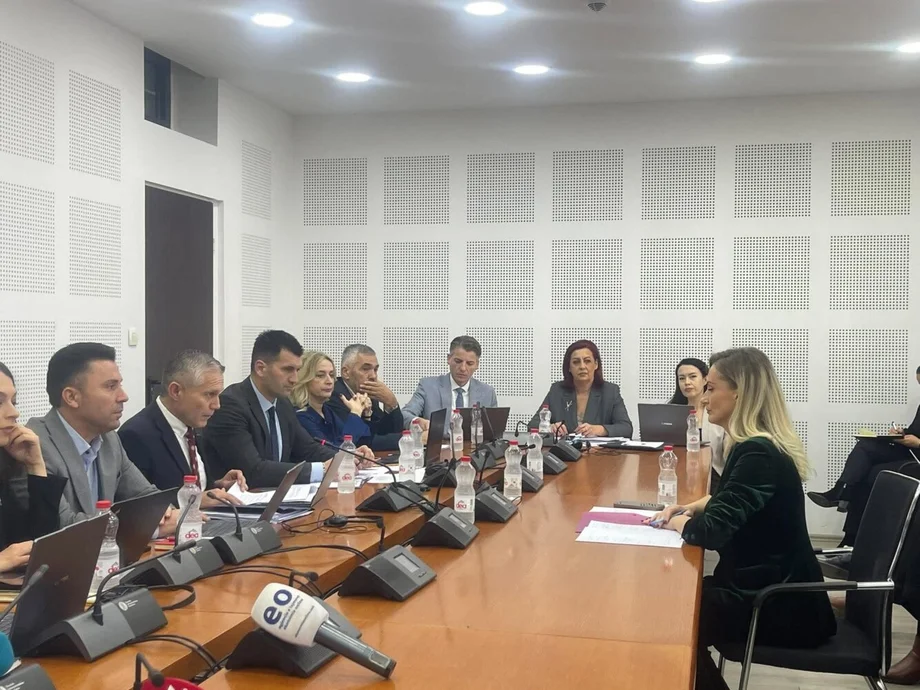
During her testimony before the Parliamentary Inquiry Commission, she spoke about her institutional responsibilities, the capacities of the Centre for Social Work, and the meeting she had held with Zekaj a few days after she reported the case to the police.
At the beginning of her statement, Mujaj-Bajraktaraj said she had been unfairly judged and vilified for responsibilities that, according to her, did not fall directly within her remit.
She explained that she does not handle individual cases or make professional decisions on cases of violence; rather, her responsibility is related to developing policies for the advancement of the social sector at the local level.
“I do not handle cases directly, I do not give opinions, and I do not make decisions regarding children or cases of violence. I am a political director in the sense that I develop policies for the advancement of the social sector at the local level. That is my responsibility,” she said.
Speaking about the capacities of the Centre for Social Work in Peja, the director said that a total of seven officials were employed across the two services offered by the centre.
According to her, the number of employees in the professional service had decreased by two, as one of the workers, a psychologist, had gone on maternity leave, while another had been transferred to a different department.
She assessed that this had increased the workload of cases and made it more difficult to meet the required professional standards.
Mujaj-Bajraktaraj said the lack of a specific grant for social services limits municipalities' ability to increase their human and infrastructural capacities.
Regarding the case of Arlinda Zekaj, she confirmed that she had met with her, but denied claims that she had pressured her to withdraw her complaint.
“No, that is not true,” she replied when asked about the matter.
The director said the meeting had taken place on Monday morning, after Zekaj had reported the case to the police on Friday, July 10, in the afternoon.
According to her, Zekaj had requested a meeting immediately after the start of working hours, and she had received her.
During the meeting, Mujaj-Bajraktaraj said that the deceased had expressed dissatisfaction with the way the case had been handled by the Police and with the professional assessment made in relation to it.
“Arlinda expressed concerns about the handling of the case by the police. At the police station, where the social services official was also present. She requested that the case continue to be handled in person, with the presence of the American Embassy, and expressed professional concerns about the assessment, describing it as one-sided,” she said.
Asked what action she had taken following Zekaj’s concerns, the director said she had called in the head of the social service to advise her about her rights and the next steps.
According to her, the head of the social service had asked Zekaj to submit her requests and complaints in writing so that their handling could be reviewed.
“As soon as I understood the reason for the meeting, I called in the head of the social service in his professional capacity to advise the person concerned about her rights and the procedures going forward. The head asked Arlinda to submit all these requests and complaints in writing,” Mujaj-Bajraktaraj said.
The Parliamentary Inquiry Commission is examining institutional actions and failures to act in the case of the murder of Arlinda Zekaj, as well as the handling of violence against women and children in the family.