
Government declares emergency measures for electricity for 60 days
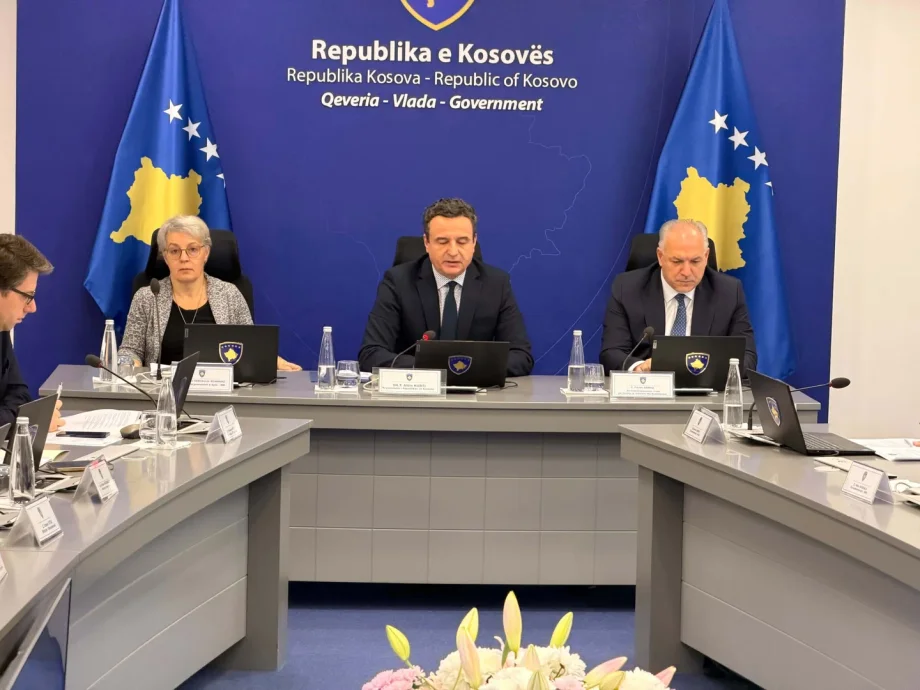
The Government of Kosovo has decided to declare emergency measures for the supply of electricity for a period of 60 days. The measures aim to ensure a stable energy supply for citizens and the economy at a time when the country is facing difficulties in the energy sector. Prime Minister Albin Kurti said at a Government meeting that […]
The Government of Kosovo has decided to declare emergency measures for the supply of electricity for a period of 60 days.
The measures aim to ensure a stable energy supply for citizens and the economy at a time when the country is facing difficulties in the energy sector.
Prime Minister Albin Kurti said at a Government meeting that the situation had become more difficult due to restrictions on domestic production capacity and the blocking by Serbia of electricity transmission lines.
The proposed measures include making use of the production capacity of the Ujman Hydropower Plant, saving electricity at public institutions, and taking other measures as needed.
“Kosovo, with restrictions on domestic production capacity and Serbia’s blocking of electricity transmission lines, is naturally facing a more difficult situation. Therefore, the Ministry of Economy has proposed declaring emergency energy measures for a two-month period, namely sixty days. These measures include making use of the production capacity of the Ujman Hydropower Plant for universal service consumers, taking measures to save electricity at public institutions, and other measures that the Government may take as needed. Our goal is to make the most efficient use of existing capacity and reduce risks to a stable supply for our citizens and economy,” Kurti said, KP reports.
Minister of Economy Artane Rizvanolli announced that the Ujman Hydropower Plant would be required to produce electricity during periods of peak demand and sell it to the universal service supplier to supply citizens and micro and medium-sized enterprises.
An emergency technical committee will also be established to monitor the situation and propose additional measures to the Government. All public institutions will be required to take steps to save electricity.
“Taking these factors into account and, on the other hand, the continued blocking of the lines by Serbia, we propose declaring emergency measures that include taking several immediate steps. These include requiring the Ujman Hydropower Plant to generate electricity when demand is highest and sell it to the universal service supplier for citizens and micro and medium-sized enterprises. The establishment of an emergency technical committee is also envisaged; it will monitor the situation and propose other measures that the Government may take. The decision also requires all public institutions to take measures to save electricity during this period,” she said.
However, the emergency measures also require approval by the Assembly of Kosovo before they can enter into force.
Rizvanolli also announced delays in bringing unit B1 of the Kosovo B Thermal Power Plant back into operation. According to her, the European Union’s representative in Kosovo, as the contracting authority for the project to reinstall electrostatic precipitators and reduce nitrogen oxides, has announced delays in carrying out the works.
The unit was scheduled to return to operation on November 25, under the contract between the EU and the contracting company.
At the same meeting, the Government also decided to impose a temporary public service obligation on the Kosovo Energy Corporation (KEK) to secure cross-border electricity transmission capacity during December.
Minister Rizvanolli explained that KEK would be required to secure usage rights for a portion of this capacity for the period from December 1 to 31, 2026.
According to her, this measure aims to prevent a possible increase in the costs of cross-border capacity, since prices can rise significantly during periods of heavy load on the transmission lines.
The Government justified these measures on the grounds of the need to address difficulties in the energy sector and reduce the risk of supply interruptions.














