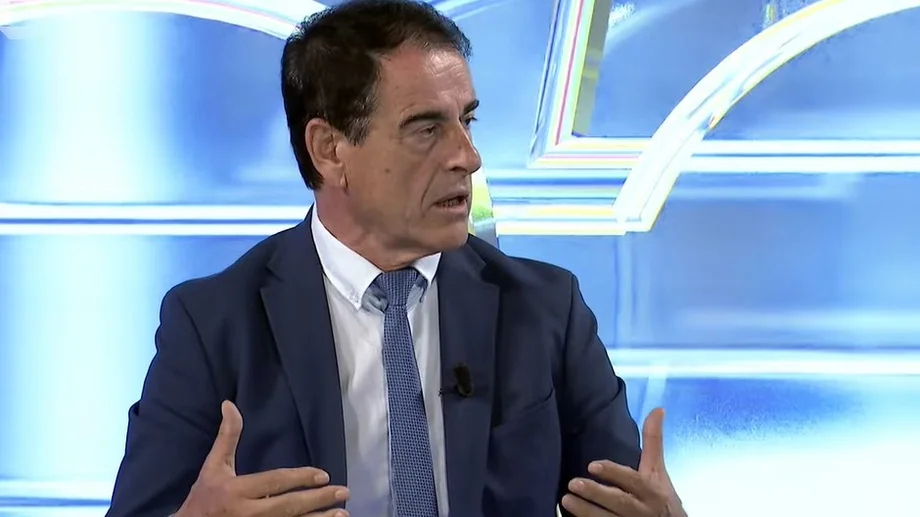
Ibishi on FSK soldier injured during training: Case must be investigated and measures taken
Security expert Nuredin Ibishi has said that injuries during weapon handling and military exercises can occur even in experienced armed forces, but stressed that every case must be investigated and treated seriously in order to identify the causes and prevent similar incidents in […]
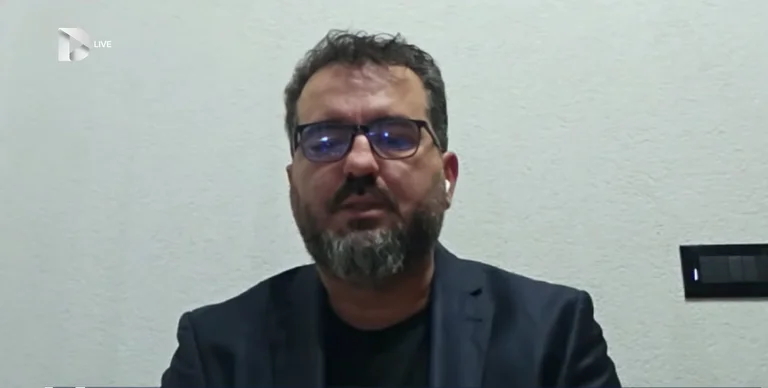
Security expert Nuredin Ibishi has said that injuries during weapon handling and military exercises can occur even in experienced armed forces, but stressed that every case must be investigated and treated seriously in order to identify the causes and prevent similar incidents in the future.
Commenting on the case of a member of the Kosovo Security Force (KSF) who was injured during training at a firing range after the weapon he was practicing with exploded, Ibishi told Ekonomia Online that such a situation could be related to the weapon or ammunition, including a 40-millimeter grenade launcher.
“But look, these things happen. I’m a serviceman myself and I know; they’ve happened to colleagues of mine who have more experience. They happen during weapon handling; it has to do with the grenade launcher, that is, 40 mm. Now, whether the weapon or the ammunition was to blame is not important; what matters is establishing why it happened,” Ibishi said.
He stressed that the main priority should be protecting the lives and health of KSF members, after which the circumstances and causes that led to the incident should be determined.
“First and foremost, the KSF members are protected by the state. That is, first and foremost, this concerns the principles of protecting the lives and health of KSF members. Then the other issue is to establish the causes of why that mishap occurred. And then measures should be taken to prevent it from happening again,” he said.
According to Ibishi, if the incident resulted from a mismatch in the weapon’s or ammunition’s caliber, this matter should be clarified and resolved, regardless of whether different manufacturers are involved.
He called for the case to be handled through the KSF’s institutional mechanisms, starting with its internal structures, the commander and the KSF Inspectorate, and extending to the Ministry of Defense and other oversight institutions.
“Also, the measures that need to be taken immediately, that is, measures based on the report or expert assessment should also be taken to resolve this situation. So, starting with the KSF’s internal structure, then the commander, the KSF Inspectorate, then the minister, who also requests a report, all the way to the Minister of Defense—I mean, all the way to the Government,” Ibishi said.
Ibishi also mentioned other mechanisms which, he said, should exercise oversight and look after the rights of KSF members, including the KSF Commissioner and the parliamentary Committee on the KSF and Security.
“We have, in case the public is unaware, a KSF Commissioner, who is rarely seen in public. I don’t know whether he does anything concerning the rights and duties of KSF members—he is meant to protect them. All the way to the parliamentary Committee on the KSF and Security,” he stressed.
Ibishi added that even if it was a minor injury, that did not remove the need to investigate the case and follow the relevant procedures. According to him, the KSF should not be treated as a closed institution whenever such incidents occur, since they do not necessarily involve classified information.
“So, in all of this, I’m assuming it may have been a minor injury, but regardless, it must be determined through the procedure I described, and there’s nothing wrong with that. The KSF is not some hidden, secret entity, except for its classified documents. These things happen in every armed force,” the security expert told Ekonomia Online.
According to him, the problem would be if the case were concealed or not made public, while the media should not be criticized for reporting such an event.
“There is no reason, no reason to criticize. Criticism is warranted if these things are covered up or concealed. And there should be no resentment toward journalists for publishing it. It should be reported—why not? It’s not some secret. It may be target practice or a tactical exercise involving live-fire weapons. That is, these things are routine,” Ibishi said.
He went on to stress that attention should focus on compliance with safety procedures, investigating the circumstances and taking measures to prevent similar incidents from happening again.
“I think that the only criticism in this regard can be about whether procedures were followed and what should be done to prevent this from happening again. It wasn’t the end of the world. Fortunately, it didn’t end in a fatality, but that doesn’t mean these procedures shouldn’t be followed,” he emphasized.
Ibishi also returned to the issue of institutional responsibilities, calling for clarification of each mechanism’s role in handling such incidents, from the KSF commander and the Inspectorate to the minister, the prime minister and the KSF Commissioner.
“What is the duty of the KSF commander, the Inspectorate, the minister, the prime minister, the KSF Commissioner? The public doesn’t even know what duty he performs for the KSF. The parliamentary Committee as well. So, certain matters should not be treated as if they are secret; that is, nothing there is secret. That is why I am critical,” he added.
Meanwhile, the Kosovo Security Force announced that one of its members had sustained minor injuries during training at one of its firing ranges. According to the statement, the incident occurred several months ago, while the KSF’s response came after several media outlets published a video showing the moment the soldier’s weapon exploded during training.
In its clarification, the KSF said that conducting training with ammunition involves a high level of risk and that preventive measures are taken in advance to manage that risk./EO