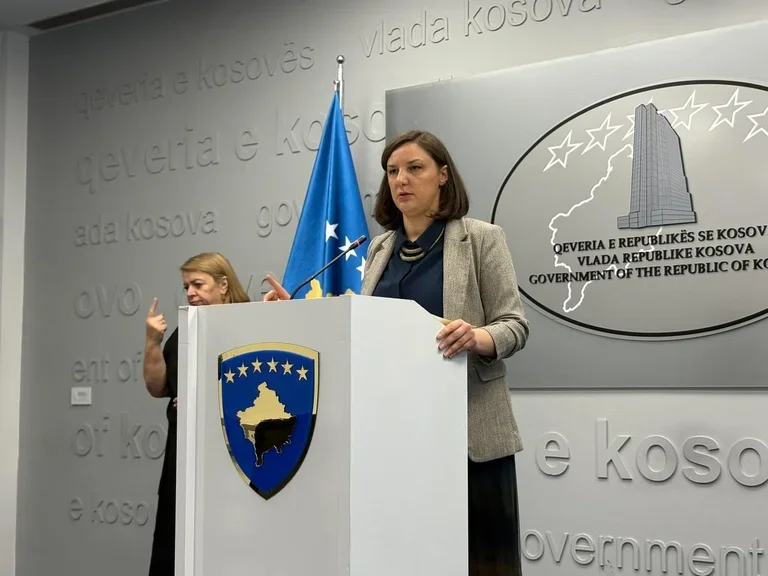
Rizvanolli explains which companies are affected by the ban on energy trading with Serbia
Minister of Economy Artane Rizvanolli has provided further details regarding the Government’s decision to ban electricity trading with Serbian companies, clarifying that the measure applies to companies operating in Kosovo that have ownership ties or shareholders from Serbia. She announced that implementation of the decision will […]
Minister of Economy Artane Rizvanolli has provided further details regarding the Government’s decision to ban electricity trading with Serbian companies, clarifying that the measure applies to companies operating in Kosovo that have ownership ties or shareholders from Serbia.
She announced that implementation of the decision will be monitored by the relevant institutions, namely the Energy Regulatory Office (ERO) and the Transmission, System and Market Operator of Electrical Energy (KOSTT).
Rizvanolli clarified that the ban means that trading within Kosovo’s territory with companies that are subsidiaries of Serbian companies, have a parent company in Serbia, or have shareholders and ties to the Serbian state will not be possible.
“As far as the implementation of the decisions is concerned, the relevant institutions, the ERO and KOSTT, are responsible for monitoring them, and implementation must be carried out through them. This means that within the territory of the Republic of Kosovo, trading cannot take place with companies whose parent company is in Serbia, or which are subsidiaries of a Serbian company, whether they are companies with shareholders who are part of the Serbian state or have ties to the Serbian state,” Rizvanolli said.
Speaking about when the decision was made, the minister said Kosovo received official confirmation of Serbia’s violation in October 2025, from the Secretariat and the Council of Ministers of the Energy Community.
She said Serbia had been given a deadline to fulfil its obligation, but that this had not happened. According to her, the Government had made one last attempt through the European Union, with the aim of freeing up the lines before winter.
“As I mentioned earlier, in October 2025 we received confirmation of this violation, an official confirmation of a violation of the law from the Secretariat and the Council of Ministers of the Energy Community. Under that decision, Serbia was given a deadline to remedy the situation and fulfil that obligation. This did not happen; however, we made one last attempt, as I said, through the European Union, to free up the lines before winter so that trading through these lines could be enabled. Since that did not happen, we are doing it now,” she said.
Rizvanolli stressed that Kosovo, as a state that respects domestic and international law, had acted cautiously before intervening in the energy market. She added that so far they had had no information or indications that any Kosovo company had traded energy with Serbian companies.
However, the minister mentioned as an exception the supplier operating in the northern municipalities, which was established under the Brussels Agreement. According to her, this supplier receives energy from Serbia, but at this stage it will not be affected by the measure because it operates on the basis of an international agreement.
“One exception is the supplier that supplies the northern municipalities, which was established under the Brussels Agreement. According to our information, it receives energy from Serbia, and at this stage, because it is based on an international agreement, we will not intervene there. However, as the prime minister also said, we do not rule out the possibility that the measure could be escalated in the future and affect that company as well, and that we could review the implementation of the Brussels Agreement on energy in its entirety, if Serbia does not implement it on its side,” Rizvanolli said.
She said she could not comment on the other small suppliers operating in the market, since market oversight is not the responsibility of the Ministry of Economy.
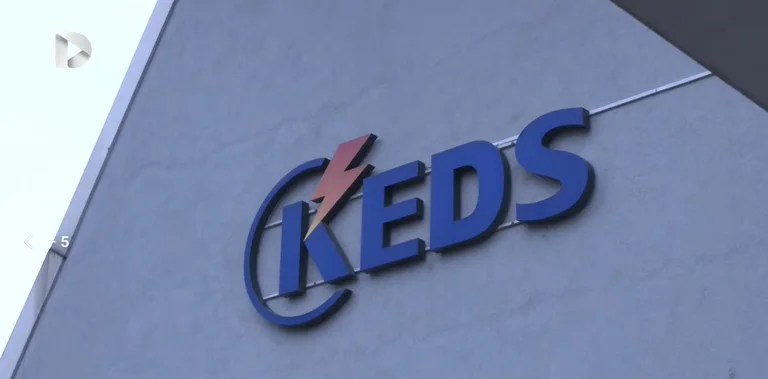
Rizvanolli also mentioned the public enterprises KESCO and KEDS, saying that according to their information and reports, there had been no energy trading with Serbian companies.
“In any case, as you know, the ERO is the authority responsible for market oversight, and there was a period when the ERO’s oversight was genuinely difficult, if not impossible, because we did not have a constituted Assembly. However, I believe that now they too will be more vigilant, and the Assembly is there to oversee them and to take all the appropriate measures,” Rizvanolli concluded./EO