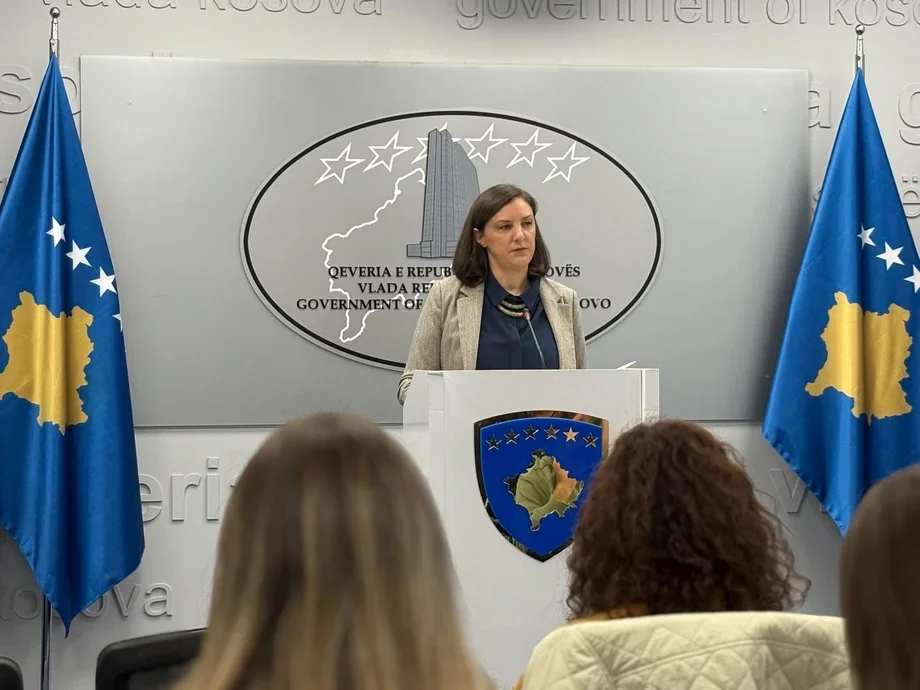
Rizvanolli explains why the Government halted electricity trading with Serbian companies
Minister of Economy Artane Rizvanolli announced that the Government of Kosovo has decided to halt electricity trading with Serbian companies as a countermeasure to Serbia’s blocking of transmission lines. At a press conference following the Government meeting, Rizvanolli explained that Serbia’s blocking of transmission lines, […]
Minister of Economy Artane Rizvanolli announced that the Government of Kosovo has decided to halt electricity trading with Serbian companies as a countermeasure to Serbia’s blocking of transmission lines.
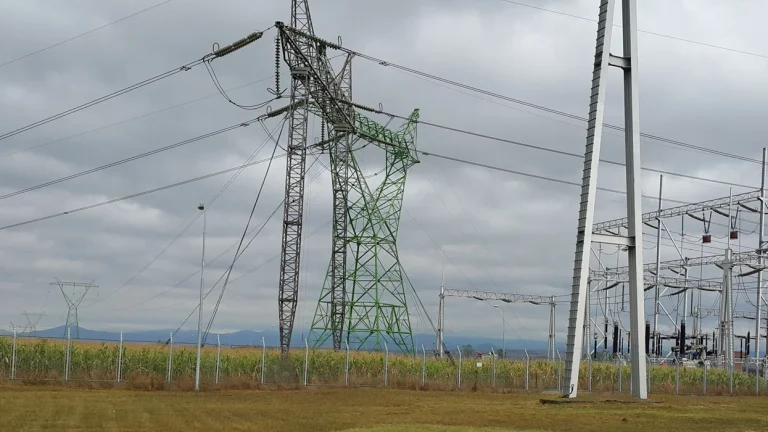
At a press conference following the Government meeting, Rizvanolli explained that Serbia’s blocking of transmission lines since December 14, 2020, has caused Kosovo considerable financial losses and jeopardized the security of its electricity supply.
She cited 2024 as one of the periods when the consequences of this blockade were most apparent, due to the rise in cross-border capacity prices and costs for Kosovo.
“Since December 14, 2020, when Kosovo became independent from the energy bloc with Serbia and began operating as an independent regulatory bloc within the Albania-Kosovo bloc, Serbia has blocked transmission lines with Kosovo for commercial allocation and trading. This has caused considerable damage to Kosovo, including financial losses, as well as, in some cases, risks to the electricity supply,” Rizvanolli said.
The minister stressed that Kosovo’s request to open the lines is not driven by a desire to import electricity from Serbia, but by the possibility of using them to transit energy from other countries.
“We do not want the lines with Serbia opened because we wish to import electricity from Serbia; rather, Serbia’s blocking of the lines means they cannot be used by us for transit. This means that electricity from other countries cannot come through these lines, including the fact that bringing in electricity from the HUPX exchange, one of the region’s most liquid exchanges, is made much more difficult or rendered impossible,” she said.
Rizvanolli said that following KOSTT’s official complaint to the Energy Community in 2021, the Energy Community’s Ministerial Council, in December 2025, found that Serbia had violated the treaty and ordered it to open the lines for trading by July 1, 2026.
However, she said, Serbia had not implemented this decision by the specified deadline.
“After many efforts on our part and following an official complaint lodged by KOSTT with the Energy Community in 2021, the Energy Community Ministerial Council finally found and confirmed this violation of the treaty and the acquis by Serbia in December 2025, and ordered Serbia to open the lines for trading by July 1, 2026. Nothing happened by July 1,” Rizvanolli said.
The minister said that on November 11 she had approached the Minister of Entrepreneurship, Trade, Industry and Innovation, Mimoza Kusari-Lila, asking her to consider the possibility of taking trade measures as a countermeasure against Serbia for blocking the lines.
She thanked Kusari-Lila for her swift response, noting that today’s decision was proposed after reviewing the documentation provided, including reports from ERO and KOSTT.
“For this reason, on November 11 I approached the Minister of Entrepreneurship, Trade, Industry and Innovation, Ms. Mimoza Kusari-Lila, asking her to consider this issue and trade measures as a countermeasure against Serbia for blocking the lines. I thank the minister for her swift response; after reviewing the documentation we provided, including reports from ERO and KOSTT, she proposed the decision we adopted today, namely, to prohibit electricity trading with Serbian companies,” Rizvanolli said.
The minister clarified that the decision covers not only Serbian companies, but also companies with Serbian parent companies, Serbian shareholders, or direct or indirect ties to Serbian citizens./EO