Šešelj’s son, who describes Kosovo as occupied territory, appointed to Serbia’s delegation for cooperation with Republika Srpska
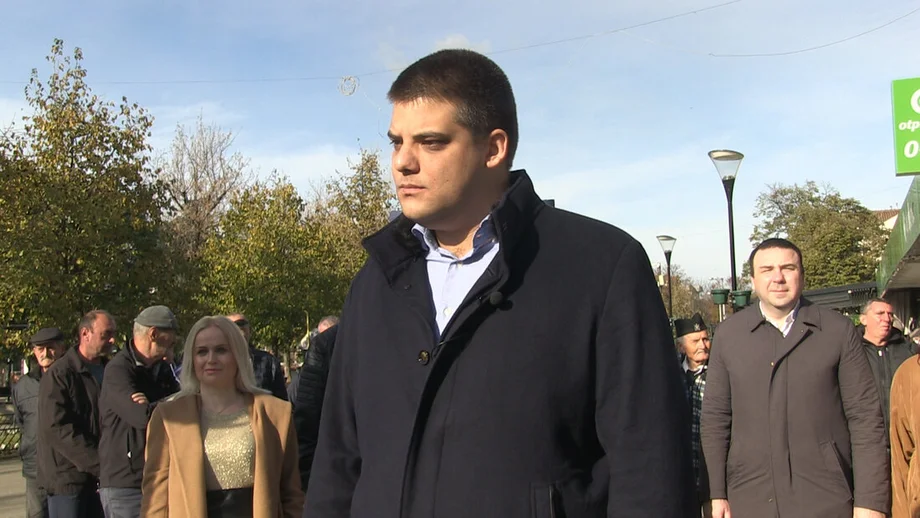
Aleksandar Šešelj, the son of Serbian politician Vojislav Šešelj, who was convicted by the Hague Tribunal of crimes against humanity, has been included in the delegation of the Serbian Assembly to the Serbia–Republika Srpska Parliamentary Forum.
The decision on the composition of the delegation was made on November 25, 2026, by the Serbian Assembly, while the official document was signed by the speaker of the institution, Aleksandar Čupić.
In the list of 11 members, Aleksandar Šešelj’s name appears last, as a member of the delegation that will represent the Serbian Assembly at this joint forum with the entity of Republika Srpska in Bosnia and Herzegovina.
His inclusion in the delegation has prompted reactions on social media because of the surname he bears and the political history of the Šešelj family.
Jovan Golubović, in a reaction on Facebook, mocked the inclusion in the parliamentary delegation of the son of a person convicted of war crimes.
“Hahahaha… THE SON OF A WAR CRIMINAL CONVICTED OF WAR CRIMES, ŠEŠELJ, IS A MEMBER OF THE DELEGATION??? … But an even greater tragedy is that the document was signed by the speaker of Russia’s parliament—sorry, Serbia’s!”, Golubović wrote.
Who is Vojislav Šešelj?
Vojislav Šešelj is the founder and longtime leader of the Serbian Radical Party (SRS), one of the best-known figures of Serbian nationalism during the breakup of Yugoslavia and the wars of the 1990s.
He was one of the most vocal supporters of the project known as “Greater Serbia,” a political ideology that sought to include territories inhabited by Serbs in a single state.
Šešelj was tried by the International Criminal Tribunal for the former Yugoslavia in The Hague for crimes committed during the wars in the former Yugoslavia.
In 2016, the Tribunal’s Trial Chamber acquitted him of the charges. However, on April 11, 2018, the Appeals Chamber of the International Residual Mechanism for Criminal Tribunals partially reversed the decision and sentenced him to ten years in prison for instigating deportation, persecution and other inhumane acts as crimes against humanity.
The sentence was linked to a speech he gave on May 6, 1992, in Hrtkovci, Vojvodina, where he called for the expulsion of the non-Serb population. Time spent in pretrial detention was credited toward the sentence, which was deemed served.
Šešelj was one of the leading figures in Serbian ultranationalist politics and for years supported territorial claims against neighboring countries, including Kosovo.
His son continues the Serbian Radical Party’s politics
Aleksandar Šešelj, born in 1993, is deputy leader of the Serbian Radical Party and a member of the Serbian Assembly.
He won his seat on the electoral list led by Aleksandar Vučić, “Aleksandar Vučić – United Serbia,” while in the current parliamentary composition he is part of the parliamentary group associated with this list.
Despite having obtained his mandate on Vučić’s list, he continues to hold the position of deputy leader of the party founded and led by his father.
His positions on Kosovo have also followed the line of the Serbian Radical Party’s politics.
In July 2026, Aleksandar Šešelj stated that Kosovo is territory under NATO occupation and that the institutions in Pristina, according to him, operate with the support of Western powers.
In a television appearance, he accused Prime Minister Albin Kurti of, as he put it, “the ongoing persecution of the Serbian people in Kosovo.”
“Kosovo and Metohija is territory under the occupation, first and foremost, of the NATO alliance, but also of the separatist structures installed there,” Šešelj stated.
These statements reflect the continuity of the Serbian Radical Party’s positions, which does not recognize Kosovo’s independence and continues to treat it as part of Serbia.
The parliamentary forum linking Belgrade with Banja Luka
The Serbia–Republika Srpska Parliamentary Forum is a mechanism for cooperation between the Serbian Assembly and the assembly of the Republika Srpska entity in Bosnia and Herzegovina.
It was established on the basis of a memorandum signed on September 20, 2023, and consists of delegations of 11 members each from the two parliaments.
The mechanism aims to strengthen institutional and parliamentary cooperation between Belgrade and Banja Luka, within the framework of the special relations between Serbia and Republika Srpska.
Aleksandar Šešelj’s inclusion in this delegation places a representative of the Serbian Radical Party in an important mechanism for political cooperation between Serbia and the Serb entity in Bosnia and Herzegovina.
This comes at a time when Belgrade’s policy toward Kosovo and Bosnia and Herzegovina continues to be one of the main issues of debate in the region, particularly because of territorial claims, the concept of the “Serb World,” and the persistent positions of Serbian politicians who do not recognize Kosovo’s independence./TheGeoPost