Trump Failed
To fully understand the significance of the major electoral reversal the Republicans have just suffered, we need to go back 12 months, when President Donald Trump seemed to be in a favorable position to carry out an ambitious agenda that was still supported by a large part of public opinion. At the time, Trump was leading […]
To fully understand the significance of the major electoral reversal the Republicans have just suffered, we need to go back 12 months, when President Donald Trump seemed to be in a favorable position to carry out an ambitious agenda that was still supported by a large part of public opinion.
At the time, Trump was leading a country at peace, with an economy that was growing, though not equally for everyone. Through legal and illegal methods, he had weakened the bureaucracy of the so-called “deep state,” which during his first term had delayed and obstructed the implementation of his trade and immigration policies.
He had purged the United States Agency for International Development (USAID), which he suspected of promoting the Democratic Party’s priorities abroad. The Department of Justice had neutralized civil rights activists who opposed his efforts to end diversity, equity, and inclusion policies. He had even managed to penetrate the country’s cultural elite, particularly in Silicon Valley, where people were talking about a “change in the zeitgeist.”
It is true that Trump had alienated domestic opponents and foreign allies. He had frightened investors with his unpredictable tariff announcements. Nevertheless, in the 2024 election, he had come very close to winning an absolute majority of the popular vote. Almost a year after the start of his second term, his administration, if not popular, at least enjoyed relatively steady support. At the end of October 2025, some polls still put his approval rating close to 50 percent.
This means that the defeat the Republicans suffered on Tuesday was by no means inevitable. Trump destroyed that possibility himself. In 2024 and 2025, he had a favorable position in his hands, but this year, through a mix of vanity, instability, and foolishness, he managed to turn a possible victory into a loss.
Some of the policies Trump promised during the campaign and then implemented, such as strengthening border control, remain popular. The Center for American Progress, which supports expanding legal immigration and creating clear pathways to citizenship, found in a poll last spring that strengthening border security remained the immigration policy with the greatest support among voters.
During his first term, Trump also largely succeeded in winning the years-long debate with the political establishment over the impact of mass immigration on the working class. Contrary to the views of policymakers before Trump came to power, immigration in the United States is rarely a process from which everyone benefits. It can help businesses, but often does so by weakening the bargaining position of domestic workers. Even Nobel Prize-winning economist Angus Deaton had changed his position. In March 2024, he wrote that he no longer agreed with “the near-universal consensus among economists that immigration to the U.S. is a good thing.”
Why, then, do polls show that Trump has low ratings on immigration? Because he chose arrogance over rational argument. Instead of allowing his policies to produce the expected results, he squandered his energy humiliating his opponents.
He could have made a convincing case for the raids ordered in Minnesota. Just as strengthening border control made sense, so did implementing this policy in cities through Immigration and Customs Enforcement (ICE). But that required explanation, and explanation is something Trump has never been good at.
He seems almost allergic to the logical connection between actions and consequences, and often speaks in disconnected statements. Perhaps this is because he considers himself a master negotiator, where acknowledging a connection between two facts can often be seen as a concession to the other side.
Trump and officials in his administration repeatedly claimed that there was widespread welfare fraud among Minnesota’s Somali community. This was a justification that drew attention to the raids, but not a measured and convincing argument, which was needed. When poorly trained officials treated the operation as an opportunity to terrorize people rather than solve problems, Trump lost public support.
The same thing happened with his attacks on diversity, equity, and inclusion (DEI) policies, as well as political correctness—issues on which he initially had considerable support.
After changing the Department of Justice’s policies, Trump could have let the process unfold gradually, until the public became accustomed to a country without intrusive enforcement of affirmative action policies, speech restrictions, and new gender norms. But he could not stop himself. He behaved like a child playing with his food. He tried to impose his own rules on speech at university campuses as well, creating a system that, though different in content, was no different in structure from the censorious regime that had existed at the height of “woke” culture.
This inability to show restraint also had catastrophic consequences for foreign policy. Trump’s ideas were often reasonable: Greenland was indeed an area of strategic importance, vulnerable to the influence of hostile powers; Democrats were indeed wrong to worry more about Russia than China; countering China’s influence in our hemisphere was a strategic priority; and industrial independence, whether through tariffs or other means, was essential.
But once again, his insistence on humiliating his interlocutors created problems where none had existed before.
Canadian conservative Pierre Poilievre seemed on track to become prime minister until Trump began thoughtlessly talking about annexing Canada and making it the 51st U.S. state. This secured a victory for Mark Carney, one of Trump’s most determined opponents on the international stage.
Trump’s insistence on denigrating Denmark led to the deployment of NATO troops from other countries, not the United States, to Greenland. Then, in September, a security agreement was reached that offered nothing more than Trump could have secured from the outset, had he simply asked for what he wanted.
Trump’s two worst ideas were the two wars he launched against Iran. His poll numbers have never returned to the level they were at in June 2025, before he joined Israel in a bombing campaign aimed at destroying Iran’s nuclear program.
When Trump announced a ceasefire a few days later, it seemed as though he had shown an impressive ability to break away from a mistaken conviction. But then came Operation “Epic Fury,” on February 28.
This war has permeated every corner of the Trump administration, discrediting it as a whole. It has humiliated the United States not only militarily, but also diplomatically. It has weakened the U.S.-Israel alliance and, as a result, Israel itself. It has also caused an immediate rise in gasoline and oil prices, forcing Trump’s supporters to face the burden of inflation directly.
Districts and states that had supported Trump by large margins in 2024 turned away from Republicans this time around across the country.
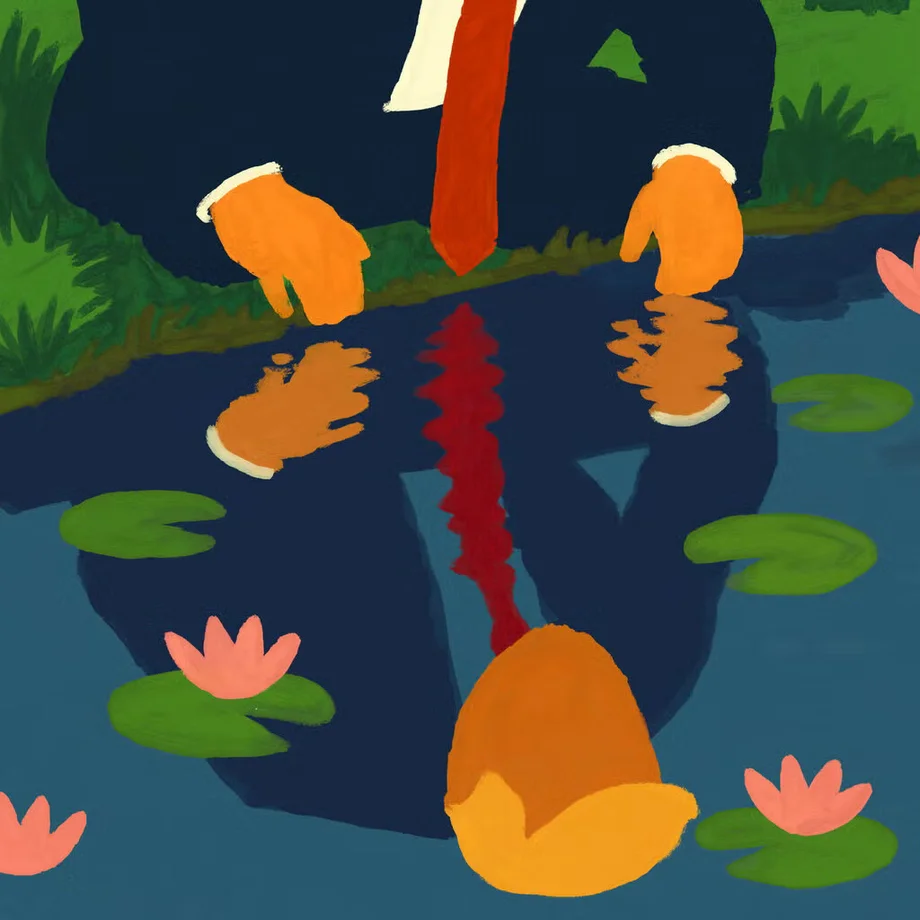
Trump’s vanity has destroyed his second term. One reason this defeat seems more significant than the one he suffered in the 2018 midterm elections is that this time he had more power with which to display that vanity without restraint.
Trump had managed to purge the executive branch of ideological opponents and replace them with his loyalists. He was also helped by the Supreme Court’s June ruling in Trump v. Slaughter, which endorsed a more powerful conception of the presidency, significantly weakening the independence of almost all regulatory agencies.
As for respecting the idea of the presidency set out in the Constitution, the Supreme Court may have been right in its ruling. But it seems that this decision has prompted the public to reflect.
From now on, if the presidency is to be given the powers George Washington envisioned, then the public will demand something else of presidents as well: that they have a character more like George Washington’s own.
Christopher Caldwell is a guest opinion columnist for The New York Times and the author of “The Age of Entitlement: America Since the Sixties.”