
Convicting KLA commanders would be a condemnation of international justice
The request by the Specialist Prosecutor’s Office in The Hague for 45 years in prison for Hashim Thaçi, Kadri Veseli, Jakup Krasniqi and Rexhep Selimi, for crimes against humanity and war crimes, is no longer merely a procedural act. It constitutes a moment of reckoning for international justice itself. Because this case has long since gone beyond […]
The request by the Specialist Prosecutor’s Office in The Hague for 45 years in prison for Hashim Thaçi, Kadri Veseli, Jakup Krasniqi and Rexhep Selimi, for crimes against humanity and war crimes, is no longer merely a procedural act. It constitutes a moment of reckoning for international justice itself.
Because this case has long since gone beyond the criminal-law framework. Today, we are facing a historic, legal and moral test.
It is a fact known worldwide, politically documented and legally sanctioned, that Kosovo and the KLA waged a just war of liberation. A defensive war. A war for life, dignity and survival. It is equally a fact that Serbia was the aggressor, responsible for ethnic cleansing, mass deportations, massacres and crimes against humanity, as established by the rulings of international justice.
In this context, the attempt to place KLA commanders on the same legal footing as the architects of a criminal state policy is a legal absurdity. Crimes against humanity, by their very definition, require widespread or systematic acts, usually linked to state power. The KLA was not a state. It was not in power. It was not a repressive apparatus. It was a liberation resistance.
This fundamental distinction is being deliberately obscured.
No one claims that war is without pain or without dark individual episodes. But international justice exists to distinguish individual responsibility from the legitimacy of a cause. If this line is erased, justice ceases to be justice and becomes an instrument of political relativization.
The paradox is stark: without the KLA’s war, there would be no state of Kosovo. Without that war, there would have been no NATO international intervention in Kosovo. Without that war, this court would not exist either, and today it holds in its hands not only its own honor, but also the credibility of genuine international justice. And today, seeking politically motivated sentences, devoid of any sense of justice, against the commanders of that war creates the perception of a justice system punishing the victim for having survived.
International justice does not lose its honor by investigating. It loses its honor by equating the aggressor with the one who defended themselves, the criminal state with the liberation resistance, power with the victim. If this process, God forbid, ends in absurd convictions, the message sent to the world will be dangerous: that wars of liberation are punishable, while state aggression is relativized.
Today, more than ever, in delivering this verdict, the Court (the Kosovo Specialist Chambers) must understand that it is not the KLA, nor Hashim Thaçi and his comrades, who are in the dock, but international justice itself, the very image of this court, that is on trial.
And this test has only one outcome that preserves legal coherence, moral dignity and historical truth:
Only the acquittal of the KLA commanders can save the honor of international justice and of this court itself.
Any other outcome would not be justice. It would be a rewriting of history in legal language.
—
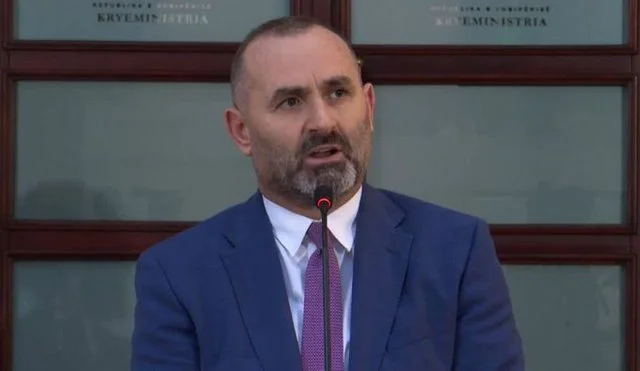
Ulsi Manja is Chair of the Committee on Legal Affairs and former Minister of Justice of the Republic of Albania.














