
The President Is Not Party Spoils
The next president must be neither a triumph for one camp nor a defeat for the other. They must be the product of an agreement that gives the country institutional calm. If the parties manage to do this, they will show that they have learned something from the crises of the past. If not, they will confirm that they still see the state as an extension of their own interests.
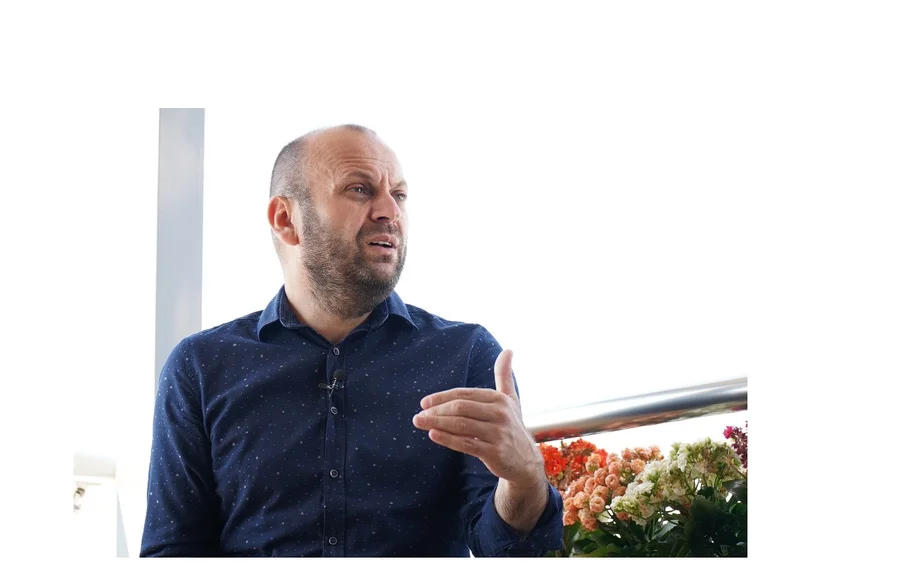
Imer Mushkolaj
Whenever the moment to elect a president draws near, a political theater begins. Names circulating in the corridors, vote calculations, quiet horse-trading and public statements about “national unity” that are often just smokescreens for narrow party interests. The president, who according to the Constitution should be a figure above the fray, ends up reduced to a political bargain. And so, the institution that should embody the unity of the state becomes hostage to party arithmetic.
The Jashari family’s refusal to accept a possible proposal for the post of president was a major blow to the political parties. Not because of the name itself, but because of the message it sent. The family that symbolizes the greatest sacrifice for Kosovo’s freedom refused to become part of political calculations. This refusal exposed the parties: it showed citizens how easily prominent names are used for daily consumption and how little seriousness is given to the institution of the presidency.
When a family with historical and moral weight refuses to enter the parties’ game, the problem is not with that family, but with a politics that thinks the symbolism of sacrifice can be exploited to cover up a lack of consensus. The refusal was a dignified act, but also a silent accusation against a political class that often seeks figures to put at the helm without first reaching the political agreement that gives such a figure meaning.
Electing a president is not a matter of marketing. Nor is it a matter of the leaders’ personal ambition. It is a test of political maturity. The Constitution requires a qualified majority in the first rounds precisely to oblige political parties to talk to one another. The idea is clear: the president must be the product of compromise, not imposition.
In practice, however, parties often behave as if compromise is a weakness. Every concession is seen as a loss. Every agreement as a betrayal of the electorate. And so, the country risks going to new elections simply because the leaders cannot find common ground on a post that, in essence, should stand above the parties.
Kosovo cannot afford manufactured crises. It cannot afford for every institutional impasse to turn into a battle for power. In a country facing major internal and external challenges, institutional stability is the bare minimum of responsibility. Early elections caused by a failure to elect a president would be a collective failure of the political class.
The Jashari family’s refusal should serve as a moment for reflection. Not to seek other symbolic names to be used as a moral card, but to understand that a president is not elected through emotion, but through clear political agreement. Symbolism cannot replace consensus. History cannot replace a vote.
* * *
Political parties must demonstrate maturity. Not through statements to the media, but through concrete action. They must sit down at the table without artificial red lines. They must accept that no one has enough votes on their own to impose a candidate. And that is precisely the essence of parliamentary democracy: the need for cooperation.
Looking beyond narrow interests means understanding that today’s president will be a guarantor of stability for years to come. They will represent the country abroad, play a role in sensitive processes and be a key factor in times of crisis. Therefore, their election cannot be reduced to the question: “How does this suit us?”
Consensus is not a compromise on principles, but a compromise with political reality. If the parties manage to agree on a figure with integrity, experience and broad acceptance, they do not lose. On the contrary, they gain legitimacy. They earn citizens’ trust that they are capable of putting the interests of the state above those of their party.
Conversely, if the election of the president becomes a reason for new elections, the message sent to citizens is clear: power matters more than stability. And that is an unacceptable luxury in a country still building institutions and trust.
The Jashari family’s refusal was a mirror. That mirror showed a politics seeking shelter behind prominent names to evade its own responsibility. But responsibility cannot be delegated. It must be shouldered. And today, the responsibility lies with the political parties.
The next president must be neither a triumph for one camp nor a defeat for the other. They must be the product of an agreement that gives the country institutional calm. If the parties manage to do this, they will show that they have learned something from the crises of the past. If not, they will confirm that they still see the state as an extension of their own interests.
Kosovo needs a president who embodies unity, but before it can have that president, it needs parties that understand that unity is not declared, but built. And it is built precisely in moments like this.














