
Bosnian foreign minister sharply criticizes Serbia and Vučić: You are hiding war criminals!
The Minister of Foreign Affairs of Bosnia and Herzegovina (BiH), Elmedin Konaković, has issued sharp criticism of Serbia and its president, Aleksandar Vučić, while participating in a panel as part of the Antalya Diplomacy Forum in Turkey. In the presence of the foreign ministers of the Western Balkan countries, including Serbia’s foreign minister […]
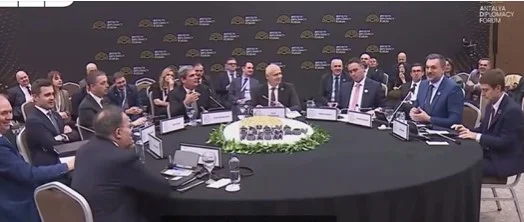
The Minister of Foreign Affairs of Bosnia and Herzegovina (BiH), Elmedin Konaković, has issued sharp criticism of Serbia and its president, Aleksandar Vučić, while participating in a panel as part of the Antalya Diplomacy Forum in Turkey.
In the presence of the foreign ministers of the Western Balkan countries, including Serbia’s foreign minister, Marko Đurić, Konaković directly accused the Serbian leadership of taking an irresponsible approach toward Bosnia and Herzegovina and undermining regional relations by glorifying and protecting war criminals.
He stressed that building good-neighborly relations does not necessarily require sympathy, but does require honesty and responsibility.
“We cannot lie and expect trust. After everything that happened during the war in Bosnia and Herzegovina, which I call aggression, relations are deeply damaged. If war criminals are hidden or praised, we cannot speak of good neighborly relations,” he said.
Konaković also criticized Vučić’s specific actions, describing his public appearance alongside figures from Bosnia who are controversial as provocative.
He cited the occasion when Vučić appeared at a press conference with Milorad Dodik and Željka Cvijanović, considering this a lack of respect for the state of Bosnia and Herzegovina.
“First he gives a convicted person a platform and then talks about the most powerful army in the region. Is this respect? Is this appropriate?”, he asked, raising concerns about messages that, in his view, fuel tensions and insecurity in the region.
Nevertheless, despite the harsh tone, Konaković left open the possibility of regional cooperation, particularly on infrastructure projects, where there is shared interest.
He concluded by stressing that dialogue is possible only on the basis of accepting the truth and taking responsibility for the past.














