
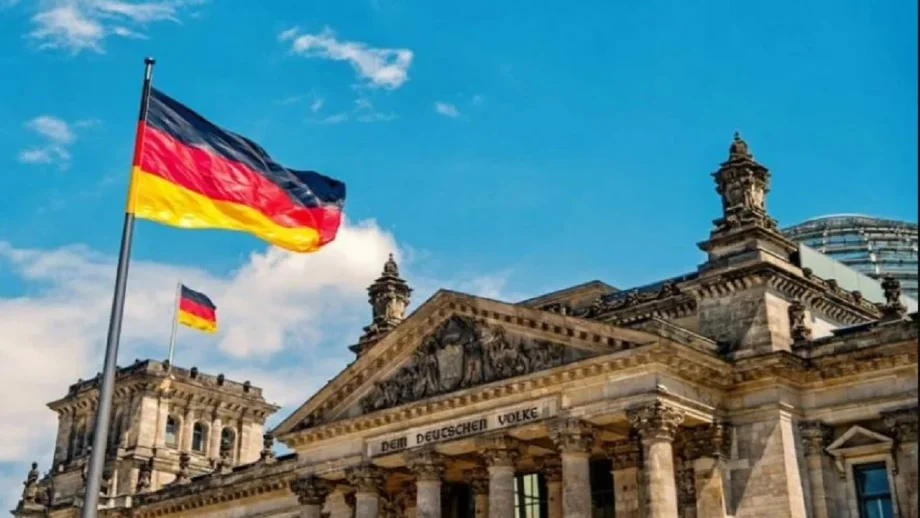
Germany announces post-Iran war support package, fuel tax cut and bonus of up to €1,000
With a package of emergency measures aimed at easing pressure on households and businesses, the German government has sought to respond to the economic consequences of the US-Israel war with Iran, at a time when Europe’s largest economy is still trying to recover after two difficult years. As Reuters reports, the final decisions were announced […]
With a package of emergency measures aimed at easing pressure on households and businesses, the German government has sought to respond to the economic consequences of the US-Israel war with Iran, at a time when Europe’s largest economy is still trying to recover after two difficult years.
As Reuters reports, the final decisions were announced on Monday, following negotiations held behind closed doors over the weekend between Chancellor Friedrich Merz’s conservative coalition and its Social Democratic partners in government.
Merz himself acknowledged that the cost of this conflict will not be temporary. As he said in Berlin, “we will feel the consequences of this war for a long time, even after it is over.”
Along the same lines, he added that the government wants to “do everything in our power – and while our resources are limited, they are there – to preserve and improve the competitiveness of the German economy and ease the situation for private households.”
The first and most immediate measure is a temporary cut in fuel tax of 17 cents per litre for petrol and diesel, lasting two months. The measure is estimated to cost €1.6 billion and is the central effort to limit the direct impact of rising international oil prices.
At the same time, the government is allowing companies to pay employees a tax-free relief bonus of up to €1,000 in 2026, without the burden of taxes or social security contributions.
The decision is not only economic, but also deeply political, as pressure had already been building in Berlin to respond immediately to the continuing rise in prices. Bavarian conservative leader Markus Söhner described the mood in society, saying: “The pressure of recent weeks has been unbearable for many people – unbearable for small and medium-sized businesses, but also for citizens themselves.”
He continued: “The daily reminders that prices are rising, such as at the petrol station, have caused a sense of helplessness, anger and a truly heavy burden… We are taking action against this.”
The package comes at a time when the German economy remains fragile. After the major turmoil caused by Russia’s invasion of Ukraine, Germany recorded contractions in both 2023 and 2024, while growth last year was limited to just 0.2%. Renewed energy pressure from the war with Iran threatens to derail the Merz government’s recovery expectations once again; the government had invested politically in restarting industry and restoring competitiveness.
In addition to the immediate measures, Germany’s coalition government has announced a second wave of interventions. In the coming weeks, a more permanent proposal for tax relief for low- and middle-income earners will be presented, with implementation planned by 2027, while the government wants to pass a comprehensive reform of the health insurance system by the summer, with the aim of reducing pressure on employers in a country that is ageing rapidly. This reform is considered essential, as healthcare costs are steadily rising and demographics are placing an increasingly heavy burden on the labour market.
The same package also includes the government’s clear aim to clash with Brussels over the future of the European car industry. Berlin announced that it will push for a further weakening of emissions targets for carmakers, rejecting the Commission’s proposal for a special regime for small cars, as well as the scenario of offsetting additional emissions with compensations./EN














