
These People Aren’t Normal
Leaders who produce constant crises instead of solutions cannot be politically normal. The problem is not only the lack of a new president, but also the lack of responsibility, the lack of courage to make decisions, and the lack of sensitivity to the situation the country is in.
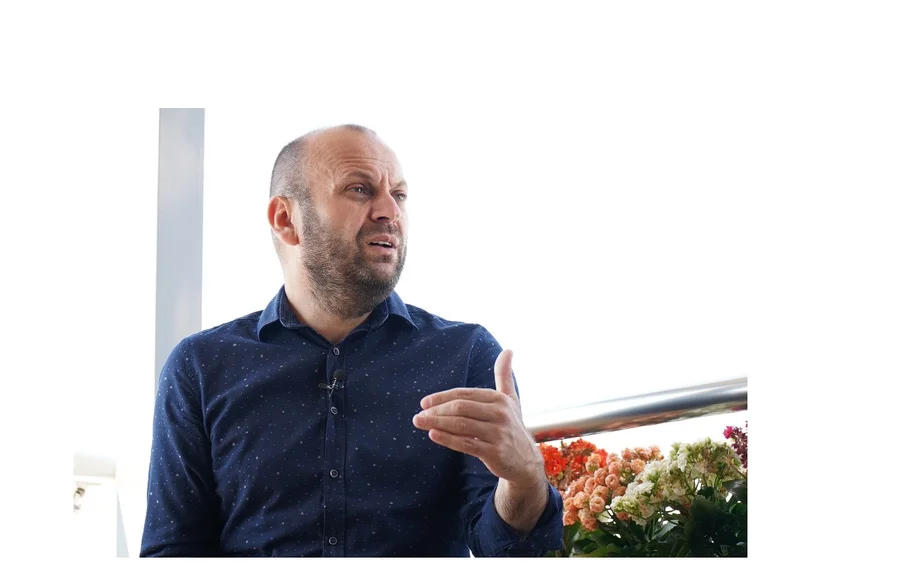
Imer Mushkolaj
In a normal country, the process of electing a president would be a serious moment of political reflection, a test of institutional maturity and an indication of the political elite’s strategic clarity. But in Kosovo, this process has turned into yet another routine episode of collective irresponsibility, where the unwillingness to act has become the norm, while crises are manufactured with frightening ease.
This is not the first time the country has faced a deadlock over the election of a president. But what makes the current situation more concerning is that it is unfolding against a broader backdrop of uncertainty, both domestically and internationally. At a time when geopolitical developments are unpredictable, international relations are shaky and Kosovo needs a clear institutional voice, the political class behaves as if these circumstances do not exist at all.
The primary responsibility, without any doubt, lies with Vetëvendosje. As the largest political force, with executive power in its hands and a strong mandate from voters, it has not only a constitutional but also a moral obligation to lead the state’s key processes. But instead, it chooses to remain silent, delay and calculate, leaving the country suspended in an absurd situation.
Why doesn’t Vetëvendosje officially propose several consensus candidates for president? Is it a lack of names? That is hard to believe. Is it a lack of political courage? Or are we dealing with a deliberate strategy to keep the situation unclear in order to avoid compromises? Whatever the reason, the result is the same: deadlock, uncertainty and a loss of public trust.
However, the opposition parties cannot escape responsibility either. Instead of seizing this moment to show seriousness and offer concrete alternatives, they have chosen to wait, calculating the potential political gains from the government’s failure. No serious candidate has been put forward, and no initiative has been taken to spark a genuine debate about the next president.
This behavior is more than a lack of responsibility; it is a form of political cynicism. Because while the parties wait for one another, the state remains hostage to a stalled process. And the citizens, as always, are the ones who pay the price for this immaturity.
* * *
What makes this situation even more incomprehensible is the ease with which the political class experiences this crisis. There is no sense of urgency, no public reflection on the possible consequences, no serious effort to find a solution. It is as if everyone has accepted the idea that crises are a normal part of the functioning of the state.
But crises are not normal. They are a symptom of failure. And when they are produced one after another, we are dealing with a deliberate pattern of non-governance. So the most important question is: why are politicians behaving as if they live on another planet? How is it possible that at such a time, when Kosovo needs stability and clarity, political leaders show such a high degree of indifference?
Part of the answer lies in a lack of sensitivity to reality. Politics in Kosovo has become a game closed in on itself, where party interests and short-term calculations dominate the public interest. In this game, citizens are merely spectators, while institutions are turned into tools for maintaining power.
But this approach is dangerous, because it creates an ever-widening gap between politics and reality. And when that gap becomes too deep, the consequences are unpredictable.
Electing a president is not a technical matter. It is a moment that determines the direction of the state and reflects the values on which the political system is built. When this moment is treated with so little seriousness, then we have a profound problem with the very concept of the state.
Instead of an open debate about the criteria the next president should meet, and the role he or she should play in a complex international context, we are confronted with silence. A silence that speaks louder than any statement.
This silence is an indication of a profound lack of vision, because a political class that is unable to articulate a clear idea of the country’s president is unlikely to have a clear vision for the state’s future.
Meanwhile, crises continue to be produced. One after another, without any serious reflection on their causes and consequences. It is as if the political system has entered a closed cycle, where failures are repeated without anything being learned from them.
Ultimately, the problem is not only the lack of a new president. The problem is the lack of responsibility, the lack of courage to make decisions, and the lack of sensitivity to the situation the country is in.
As long as these shortcomings persist, every new crisis will be just another chapter in a long history of political failures. A story that, unfortunately, is being written every day before our eyes.














