
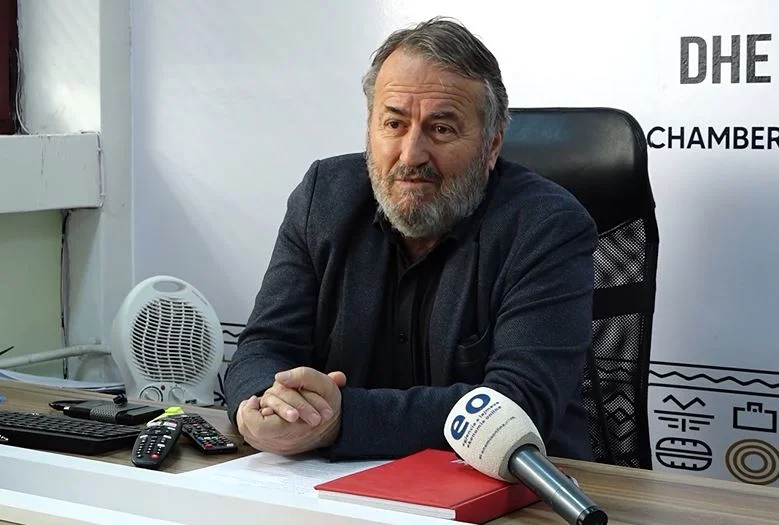
Sogojeva: €200 million package looks like a campaign; equal treatment sought for the private sector
The chairman of the Kosovo Chamber of Hotels and Tourism (OHTK), Hysen Sogojeva, has criticized the new financial package of around €200 million announced by the Government of Kosovo, saying it is being perceived as an act motivated by electoral considerations rather than a lasting solution to the price crisis. He stressed that interventions […]
The chairman of the Kosovo Chamber of Hotels and Tourism (OHTK), Hysen Sogojeva, has criticized the new financial package of around €200 million announced by the Government of Kosovo, saying it is being perceived as an act motivated by electoral considerations rather than a lasting solution to the price crisis.
He stressed that such interventions should have happened earlier, not at this stage.
“Look, if we compare the last four or five years, the government has had to intervene every time because of rising prices. Every time it has had to intervene to try to ease the rise in prices a little. But personally, I would say that we see this as a kind of campaign. Why didn’t this happen earlier? It should have happened earlier, before these latest price rises. Even with these latest increases, although it is intervening again with €200 million, this is still too little, because we have enormous increases compared with four or five years ago, or three or four years ago,” he said.
Sogojeva added that the timing of the announcement of this package had contributed to its being perceived as a political measure.
“As a campaign. That is to say, it is being seen as a campaign. If it had happened earlier, perhaps it would have been understood a little more objectively, whereas today, in these circumstances, whether there will be elections or not, we are seeing that it seems to be a kind of campaign,” he said.
He also raised concerns about the unequal treatment of the private sector, mentioning the issue of the 13th salary.
“The development of tourism that we have is thanks to the private sector. Given that this is the case, and that the 13th salary is not also being respected for private-sector workers, this is simply regrettable. That is why we are reacting to this, because public-sector employees have received it, even though I can assure you that they do much less of the work they do in the public sector than the private sector does. Instead of being incentivized, they are, on the contrary, being disadvantaged. That is why we appeal for this matter to be addressed in the same way as in the public sector,” he said.
According to him, although there have been improvements in private-sector wages, the rising cost of living remains a serious challenge.
“Earlier, there was a disparity, so to speak, between owners and workers. Nevertheless, this has begun to be addressed, because even in the private sector, everyone working in the private sector now has better wages compared with a few years ago. So this needs to be brought into balance. That is to say, workers now need to see that they have to work to earn the wage they want, but owners also need to bear in mind that wages cannot be low, because living costs have risen—that is, there have been major price increases. If you compare just the last five years, we have had an increase of almost 100–120% in basic products, so this, too, has begun to be brought into balance; nevertheless, it needs to be addressed even better,” he said.
Meanwhile, Kosovo Prime Minister Albin Kurti has announced that the government is preparing a new financial package to cope with rising inflation and mitigate the impact of the economic crisis on citizens./EO














