
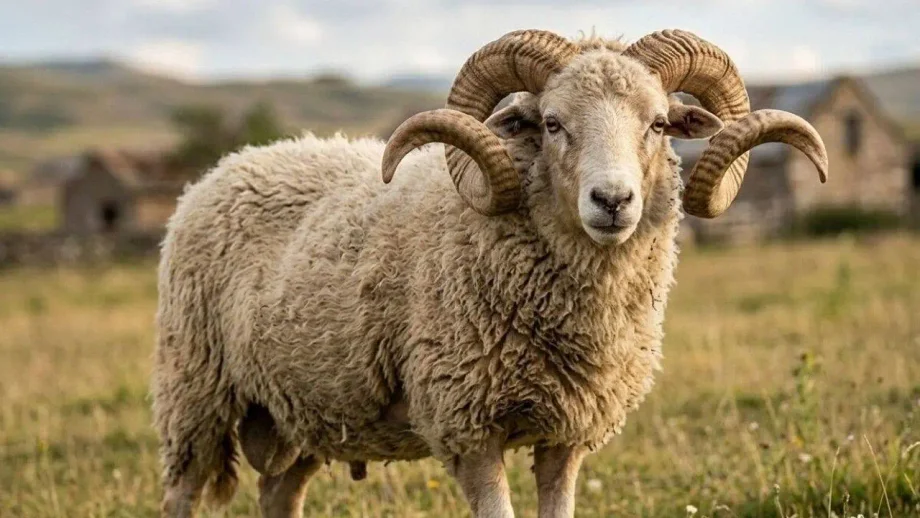
From 220 to 400 euros, the price of sacrificial animals rises in Kosovo
Rising market prices have directly affected sacrificial animals this year as well, bringing the cost of slaughtering one in Kosovo to as much as 400 euros. Farmers say that the rising cost of animal feed has significantly increased the expense of keeping livestock, while humanitarian organizations warn that this situation is making it even […]
Rising market prices have directly affected sacrificial animals this year as well, bringing the cost of slaughtering one in Kosovo to as much as 400 euros.
Farmers say that the rising cost of animal feed has significantly increased the expense of keeping livestock, while humanitarian organizations warn that this situation is making it even more difficult for families and donors to fulfill the obligation of offering a sacrifice during the Eid al-Adha holiday. This year, the Islamic Community of Kosovo has also raised the price for slaughtering a sacrificial animal in Kosovo to 200 euros, up from 180 last year.
Farmer Adhurim Berisha told KosovaPress that this year prices for sacrificial animals at their farm range from 220 to 400 euros, with slaughter included in the price. However, he explained several factors that have led to the price increase.
“At the moment, this year, sacrificial animals at our farm cost from 220 to 400 euros, with slaughter included in the price. This year, perhaps I would say there has been a small increase, but not a very large one compared with last year. Considering that feed, or the basic products for sheep, have become more expensive, we too have to raise the price of the sacrificial animal. For example, this year a bale of hay has reached 5 euros; last year it was between one and a half and two euros. Grain prices have gone up, and taking into account that everything has become more expensive,” he said.
He noted that prices vary depending on the type of animal, KosovaPress reports.
“Sheep start at 220 euros and go up to around 250 or 270; a ram costs 300–400,” Berisha said.
Meanwhile, the humanitarian organization “Islamic Relief Kosova” says it has been distributing sacrificial meat to families with orphans and families receiving social assistance for 26 years. Lavdim Gashi, the organization’s manager of the local fundraising department, said the increase in the price of sacrificial animals this year was due to the general rise in market prices and high demand for animals.
“Unfortunately, just as rising prices in the market have affected everything and every product, they have consequently affected the issue of sacrificial animals as well. Especially now, when demand is very high—not only in Kosovo but also abroad, throughout the world—and, as is known, prices have in fact gone up every Eid. But this is something that is not in our control; it depends on the suppliers. However, in this case we wanted to offer an opportunity to our donors, for whom the amount may be high, and 200 euros is not a small amount,” Gashi said.
Gashi also explained the procedures the organization follows to identify beneficiary families and distribute the sacrificial meat.
“We have a dedicated department for caring for orphans. That is, there are several women who have worked in the organization for years, and their sole responsibility is to identify cases when people come to us seeking help. They first carry out a verification and an assessment by visiting each family, then add them to our database according to the family’s needs. If we consider a family to be poor and to have orphaned children, we put it on our waiting list. Then, with every project we carry out during the year, these families are direct beneficiaries. In this case, after slaughtering the animals, we freeze the meat and organize its distribution city by city. We designate a specific location, call the families and tell them the location and the time they should come to collect the sacrificial meat,” Gashi said.
He noted that the organization applies strict criteria to suppliers and inspects the meat before distribution.
“First, several months before Eid al-Adha, we issue a public call for suppliers of sacrificial animals. There are conditions and criteria set out in local laws that the slaughterhouse must meet. The animals must have their documentation in order and proof that they are in good health. The slaughterhouse must also be licensed, and transportation from the slaughterhouse to the distribution location must meet the required conditions. One of the main requirements is that the meat be frozen and transported using appropriate vehicles for meat. In the 26 years this project has been implemented, we have never had any problems in the process of distributing sacrificial meat to our families with orphaned children,” Gashi said.
Sacrificial slaughter is one of the most important religious rituals in Islam and is carried out during Eid al-Adha as a sign of obedience, sacrifice and closeness to God. The ritual is linked to the story of the Prophet Ibrahim, who, according to Islamic belief, was willing to sacrifice his son, Ismail, at God’s command, but at the last moment God replaced him with a sacrificial animal.
For Muslims, offering a sacrifice symbolizes devotion, solidarity and help for families in need, as the meat is distributed to relatives, neighbors and socially disadvantaged groups facing more difficult economic circumstances. This year, Eid al-Adha in Kosovo falls on May 27. /KP/














