
King Charles’s White House visit: distraction and denial
By Frances Ryan, The Guardian The fact that the king’s arrival in the US was preceded by gunfire at the White House Correspondents’ Dinner set the tone for a visit built on the claim that we were still living in normal times. Forget the war with Iran, the president’s verbal outbursts against the British prime minister and […]
By Frances Ryan, The Guardian
The fact that the king’s arrival in the US was preceded by gunfire at the White House Correspondents’ Dinner set the tone for a visit built on the claim that we were still living in normal times. Forget the war with Iran, the president’s verbal outbursts against the British prime minister and the growing political violence – it’s time for Charlie to smile for the cameras.
Or at least to smile for a few highly controlled minutes, and only if there’s no sound on those cameras. Tuesday’s meeting in the Oval Office was held behind closed doors, after British officials tried to avoid a repeat of the humiliating scenes between Ukrainian president Volodymyr Zelenskyy and Donald Trump. You know a meeting is going to be difficult when one side is afraid someone might hear it.
Experts have described this four-day trip as the most challenging for US–British diplomacy since George VI met Franklin D. Roosevelt to secure support on the eve of the second world war. Appealing to an American president to fight fascism, you say? How times have changed. Still, there are bridges to build and historic ties to renew – and few people are better suited than Charles (according to some sources). As one insider put it: “He reads all the reports and knows exactly what’s going on.” Good to know that someone does.
It is nothing new for members of the royal family – or even democratically elected politicians – to meet heads of state who, shall we say, don’t pass the credibility test. But the scale of Trump’s scandals, combined with his recent insults against the British government, made this a visit where the moral compromises that often accompany power were particularly evident.
At times, it was hard to keep track of how many scandals we were collectively trying to forget. But look, there’s a ball being kicked! Is that Tom Daley at the embassy? Oh, Melania’s wearing a Dior dress! This state visit was less a diplomatic exercise than a full-blown distraction and denial of reality.
Not everyone, however, got the message. On Tuesday, statements by the new British ambassador to the US, Christian Turner, were published in the Financial Times, in which he said it was “extraordinary” that the scandals surrounding Jeffrey Epstein had brought down a member of the royal family and senior officials in Britain, “while here in the US, they haven’t touched anyone”. Turner seems not to know the rules of the game very well yet, having only taken up the post in February.
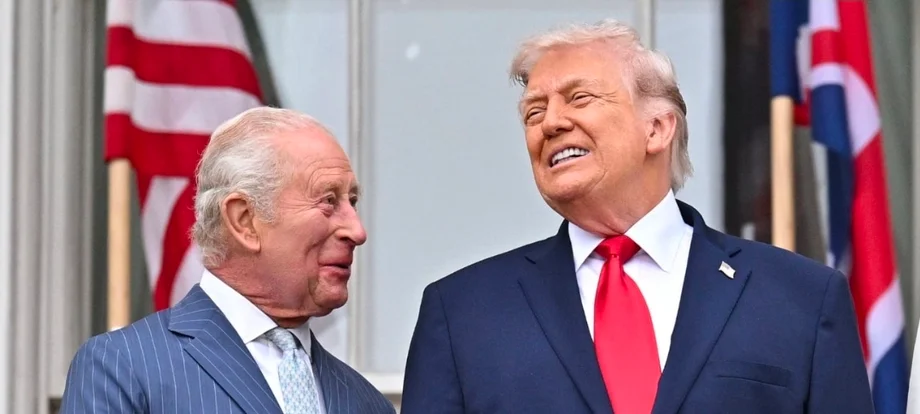
That doesn’t seem to have stopped Trump from enjoying himself, though. After Charles delivered a historic speech to Congress, the White House’s official accounts posted a photo of Trump with the monarch captioned: “TWO KINGS”.
Supporters of the monarchy often justify its existence through “soft power” – political influence achieved with banquets rather than bombs. On paper, Trump is the ideal target: a man who responds to flattery and adores grand ceremonies, perhaps because they remind him of a bygone era of autocratic rule. As historian Anthony Seldon put it: Charles is “perhaps the only person in the world Trump doesn’t want to offend”.
Perhaps. But a few days of friendship do not guarantee that Trump’s unpredictable temperament will remain steady for long, as Keir Starmer has learned the hard way. What will last longer is the sense of complicity: that the unjustifiable has once again been legitimised. There is a feeling that no matter what lines are crossed – from the illegal war against Iran to ICE detentions and deaths – allies will pretend not to see.
The fact that Charles sought rapprochement with Trump while not meeting Epstein’s victims – or even mentioning them in his speech, as expected – sends a clear message about who matters and who doesn’t, which injustices are punished and which are excused.
You could say this is the price of doing business, or simply the price we have agreed to pay. As elites gather at lavish parties, Iranian children are buried under rubble. Smile for the cameras. That’s what “special friends” do.














