
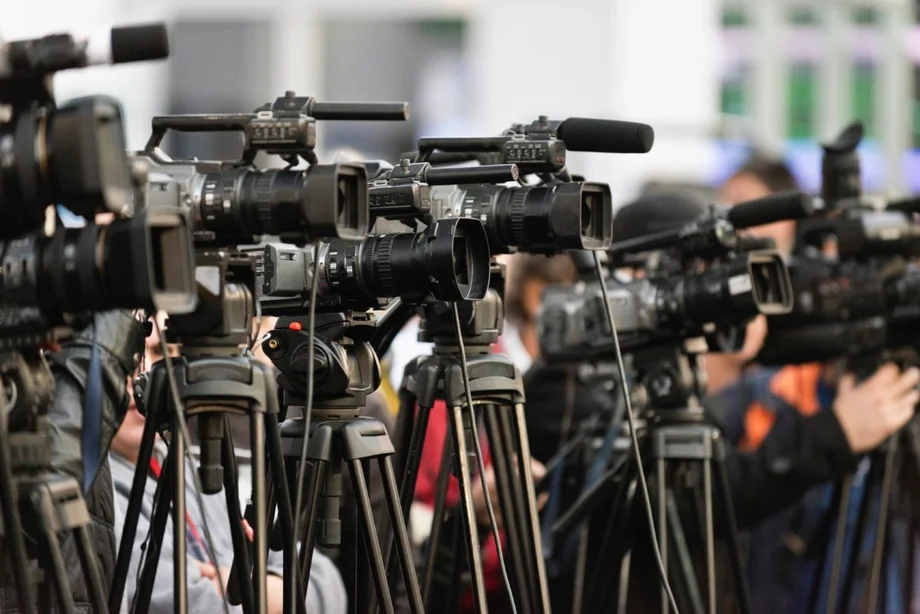
Media freedom in Kosovo fluctuates according to respondents’ mood
In the book Thinking, Fast and Slow, Daniel Kahneman describes a phenomenon that seems absurd at first glance: some small rural areas in the US have both the highest and the lowest rates of kidney cancer. There is no mystery – it is simply the effect of small samples producing extreme results. Example: if […]
In the book Thinking, Fast and Slow, Daniel Kahneman describes a phenomenon that seems absurd at first glance: some small rural areas in the US have both the highest and the lowest rates of kidney cancer. There is no mystery – it is simply the effect of small samples producing extreme results.
Example: if four people are surveyed in one case, and only one of them has kidney cancer, you will get the result that 25 percent of residents have cancer.
This is statistics used badly: it produces “truths” that have nothing to do with reality.
Precisely this feeling is created when reading Reporters Without Borders’ report on media freedom, especially when following it from year to year. To me, neither last year’s report nor this year’s reflects the real situation.
In 2026, according to this report, Kosovo improved across all indicators during the 2024/25 – 2025/26 period: the index improved from 52 to 55, moving up from 99th to 84th place. The individual indices are:
– Political: 44.61 → 46.05
– Economic: 39.88 → 41.07
– Legislative: 68.54 → 72.28
– Social: 57.28 → 63.99
– Security: 53.35 → 53.07
On paper, it looks like overall progress. On the ground, no change is apparent.
Politically, influence over RTK has increased. Economically, the media continue to survive in a distorted market where the money goes to Meta Platforms and Google. Legally, there has been no serious reform. Nothing has changed to justify an overall improvement, while security remains the same—contradictory!
So, if reality has not changed, then what has?
For me, the simplest answer is: the respondents decided to “make Kosovo look better”.
Last year, the same report ranked Kosovo below Serbia and Albania. This result was so unbelievable that it damaged the credibility of the report itself – and, indirectly, of those who provide answers to it.
This year, it seems that a “correction” has taken place. Respondents have been more careful, less extreme in their assessments – in short, they have shown more “mercy”.
If an index changes not because reality changes, but because the respondents’ mood changes, then it is not an index of reality. It is an index of mood.
And this brings us back to the main problem: methodology.
How many people were surveyed? How were they selected? How representative are they? These basic questions remain unanswered. The organization provides no concrete data and avoids a serious debate about its methodology. They speak only with like-minded people. They have not answered my questions above, but have directed me to various sections of their website. They have even used their own channels to attack my challenge, in a manner similar to the actions of authoritarians against critics through public media.
This is not transparency. This is narrative control.
Without methodological transparency, every result is questionable. And when a questionable result is presented as a global fact, we are dealing more with a communications product than a scientific instrument.
In the end, the problem is not whether Kosovo has been ranked higher or lower. The problem is that this ranking is presented as an objective measurement.
But a measurement that cannot be verified is not a measurement.
It is a story.














