We Are Facing the Relativization of Truth by the Specialist Chambers
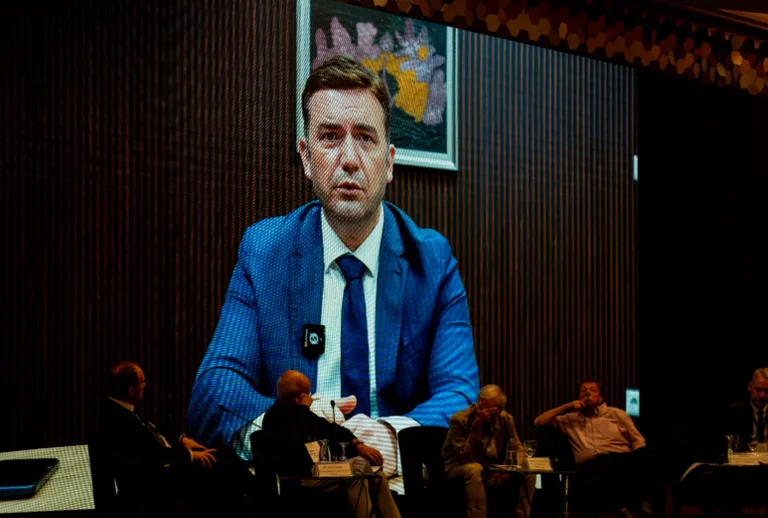
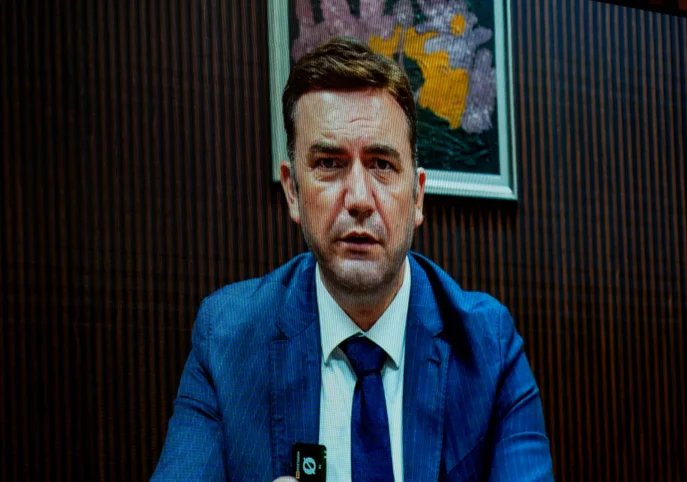
Speech by Mr. Bujar Osmani, former Deputy Prime Minister of North Macedonia and former OSCE Chairperson-in-Office, delivered at the transitional justice conference “Bridges of Remembrance,” organized by KIPRED and “Freedom Has a Name” As the former Minister of Foreign Affairs of North Macedonia and former OSCE Chairperson-in-Office, I have spent many years dealing with issues that […]
Speech by Mr. Bujar Osmani, former Deputy Prime Minister of North Macedonia and former OSCE Chairperson-in-Office, delivered at the transitional justice conference “Bridges of Remembrance,” organized by KIPRED and “Freedom Has a Name”
As the former Minister of Foreign Affairs of North Macedonia and former OSCE Chairperson-in-Office, I have spent many years dealing with issues related to conflict, peace and reconciliation. One lesson has remained unchanged throughout all this experience: peace agreements can stop violence, but they cannot create reconciliation on their own. For this, societies need trust. They need accountability. And they need the assurance that justice is being pursued fairly and impartially.
That is precisely why transitional justice matters. At its core, transitional justice is not only about courts, prosecutors and verdicts. It is about how societies confront the painful chapters of their past while building a peaceful future. It is about acknowledging victims, establishing accountability, preserving the truth and creating the conditions for lasting peace.
The Balkans understand this challenge better than most regions. Our history reminds us that conflicts rarely begin suddenly. Before violence emerges, trust usually disappears. Political disagreements deepen. Institutions lose credibility. Communities become divided. And only then does a political crisis turn into a security crisis.
That is why work on reconciliation does not begin when conflict ends. In many ways, that is precisely when it truly begins.
And it is precisely in this context that Kosovo’s experience deserves special attention.
When Kosovo accepted the establishment of the Specialist Chambers, it did something unusual in the history of transitional justice. This was not a mechanism imposed after a military defeat. It was not the result of a negotiated surrender. Kosovo accepted it voluntarily.
Its institutions chose to place their trust in international justice because they believed that accountability strengthens legitimacy rather than weakens it. This was an extraordinary act of trust. Few post-conflict societies have shown such a willingness to voluntarily submit themselves to international scrutiny.
Of course, such trust also created expectations. The expectation that justice would be fair. That facts would matter. That context would matter. And that every conclusion would be reached through a careful examination of the full reality in which the events took place.
These expectations are not political. They are inseparable from the very idea of transitional justice.
Because the purpose of transitional justice is not only accountability. It is also the preservation of truth.
Accountability and truth must reinforce one another. Neither should come at the expense of the other.
Any discussion of reconciliation in Kosovo must begin with a simple reality. There can be no lasting reconciliation without acknowledging the suffering endured by the victims of the Milošević regime. There can be no lasting reconciliation without accountability for the crimes that were committed. And there can be no lasting reconciliation without respect for the historical circumstances that ultimately led to international intervention.
Acknowledging these realities does not hinder reconciliation. On the contrary, it makes it possible.
Nevertheless, today we face another challenge. Not only denial, but increasingly relativization. The tendency to treat established facts as merely one interpretation among many. The temptation to reshape history according to the political needs of the moment.
This is dangerous. Because trust in justice depends on trust in facts.
People do not expect courts to confirm political narratives. Nor should they. But they do expect every relevant fact to be heard, every relevant circumstance to be considered and every conclusion to be reached independently, fairly and comprehensively.
This expectation is not a challenge to justice. It is an expression of trust in justice.
And precisely because justice matters, facts matter. Context matters. Historical truth matters.
Let me conclude with one final thought.
The question facing our region is not whether history will continue to affect us. It will.
The real question is whether we will have the courage and trust to confront the past honestly while building the future together. Whether we will preserve the truth while seeking justice. And whether we will ensure that the pursuit of accountability strengthens reconciliation rather than weakening it.
The past cannot be changed. But the lessons we draw from it will shape the future.