Rafuna criticizes draft regulation: Any tax on businesses is passed on to citizens
The president of the Kosovo Chamber of Commerce (OEK), Lulzim Rafuna, has expressed the business community’s concern about the Municipality of Pristina’s draft regulation on municipal fees, charges and fines, saying that every new tax on businesses translates into additional costs that are ultimately passed on to citizens. In an interview with Ekonomia Online, Rafuna […]
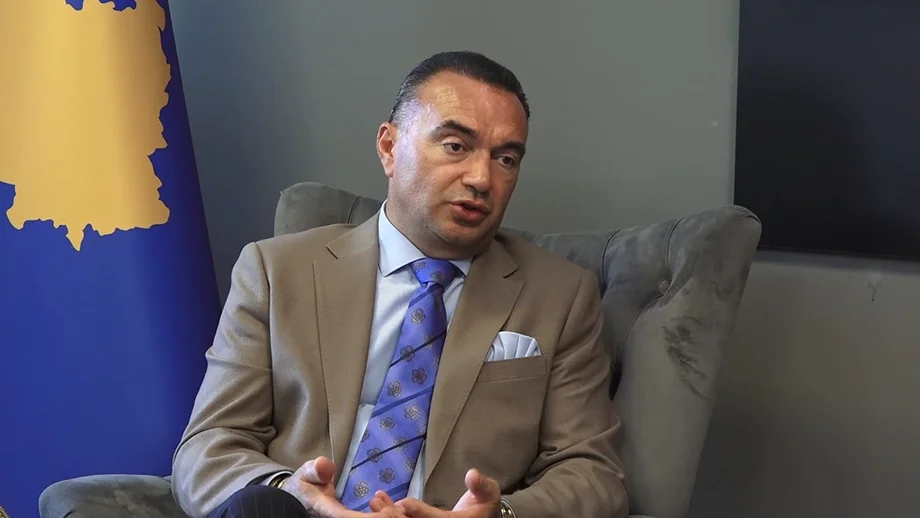
The president of the Kosovo Chamber of Commerce (OEK), Lulzim Rafuna, has expressed the business community’s concern about the Municipality of Pristina’s draft regulation on municipal fees, charges and fines, saying that every new tax on businesses translates into additional costs that are ultimately passed on to citizens.
In an interview with Ekonomia Online, Rafuna said the Chamber of Commerce has not yet held discussions with the Municipality of Pristina about the contents of the draft regulation and that it is too early to give a full assessment of the effects it could have on businesses.
Rafuna said that after the public consultation ends, they expect to hold meetings with municipal officials and business associations to analyze the impact of the proposed measures.
“We have not had a discussion with the municipality regarding the draft regulation. It is a draft regulation, and we expect to have a meeting at some point and see what effects this regulation would have on businesses if it enters into force. We always call for businesses not to be burdened, because every tax on businesses is, ultimately, an operating cost passed on to citizens. The citizen is the end consumer, who consumes either manufactured products or services provided by businesses, so it is too early to make such an assessment; again, as you said, it is under public discussion,” he said.
According to him, the sectors that could be most affected include transport and construction, because they operate in the territory of Pristina using vehicles and machinery registered in other municipalities.
“We expect that, once the public consultation ends, we will meet with municipal officials to discuss it, and also discuss it internally with our businesses, especially with the associations. This affects the transport association most, whether for freight or passengers, as well as the construction association, given that they travel around during the day and have trucks and machinery registered in other municipalities. They operate in Pristina, so we need to see what options there are to ensure that businesses are not burdened with this tax,” he told EO.
The OEK president said there is still uncertainty about how some of the proposed measures would be implemented and called on the municipality to provide further clarification before the regulation is approved.
“It is unclear to us because, according to the public statements, as far as we have been able to see, the tax is said to apply only to cars, but not to machinery or work vehicles. That is why I may be unclear. Secondly, if any tax is imposed, imposing any tax is an extra cost for a business. And undoubtedly, as I said, it is passed on to consumers because it raises prices. So once again, we call on municipal officials to meet with us as soon as possible, before this regulation comes up for a vote and before it is finalized, so that we can clarify further how it will be implemented and what it will affect, what the regulation will cover,” he said.
He added that, in addition to the content of the measures, the timing of their implementation is also important.
“Look, we also need to consider the timing. Sometimes decisions are very fair and very good, but we need to know when the best time is to bring them into force and start applying them. So I believe the municipal officials have also assessed this issue, and that the date, month or year when it enters into force will be reconsidered,” he said.
The Municipality of Pristina has issued for public consultation the Draft Regulation amending and supplementing the Regulation on municipal fees, charges and fines. The public consultation began on May 13, 2026, and will continue until June 24, 2026.
The draft regulation envisages changes to the way businesses are taxed, setting annual fees according to the type of economic activity. The draft includes various business categories, including construction, trade, hospitality, private healthcare, private education, banks, telecommunications and professional services, with separate fees for each activity.
The document also provides for an exemption from municipal tax payments for new businesses during their first year of registration, as well as a 50 percent reduction for businesses owned by women and girls during their first two years of operation.
Under the draft, businesses with more than one commercial unit will also be taxed for their units, while businesses headquartered outside Pristina but operating within the capital’s territory will be subject to municipal fees for the units operating in Pristina.
The draft regulation also includes an accommodation tax of 1 euro per person for each night spent at accommodation facilities, as well as an obligation for operators to collect, report and transfer this tax to the municipality.
The document also contains provisions on procedures for invoicing, payment, complaints and collection of municipal dues, as well as transitional provisions for the gradual implementation of the new fees./EO