
7 Mistakes to Avoid When Eating in Italy
Colombian music star Shakira has announced that she will hold a major concert on November 28 near the Pyramids of Giza in Egypt, returning to this iconic location after nearly two decades. “I’m so happy to perform in Egypt, at the Pyramids of Giza. I love you all”, […]
Colombian music star Shakira has announced that she will hold a major concert on November 28 near the Pyramids of Giza in Egypt, returning to this iconic location after nearly two decades.
“I’m so happy to perform in Egypt, at the Pyramids of Giza. I love you all”, the artist said, according to FemaleFirst.
Shakira’s last concert at this historic location was held in 2007, during her world tour “Oral Fixation”.
Meanwhile, the Colombian singer is also preparing for another significant appearance. She will perform during the halftime show of the football World Cup final, which will take place on July 19 at MetLife Stadium in New Jersey.
Shakira has said that she wants this performance to be different from the opening ceremony.
“I performed at the opening ceremony, and now I’ll be at the final. I want this show to be different from the previous one”, she said.
The artist has also revealed that several well-known names in international music are expected to appear on stage.
From ordering a cappuccino after breakfast to putting cheese on fish, avoid these common tourist mistakes on your next vacation in Italy.
It’s a warm evening in Rome. I’m enjoying a plate of pasta alla carbonara, while my friends are choosing the next wine, when a sentence in English rings through the restaurant like the sound of a needle touching a record.
“A cappuccino, please”.
Our forks stop in midair and an immediate sense of bewilderment spreads among us. It’s 10:30 p.m. Are they serious?
Every year, millions of tourists travel to Italy, many of them drawn by its famous cuisine. But although Italian food can be found all over the world, few visitors fully understand the distinctive food culture that accompanies meals in this country.
Italian cuisine is actually quite simple. It doesn’t rely on lots of spices, and dishes get their flavor from seasonal and local ingredients. Meals aren’t eaten in a hurry and are considered one of life’s greatest pleasures.
For this reason, Italians have a series of unwritten rules that help preserve flavors and ensure that every meal is properly enjoyed.
Are we being a little dramatic about these rules? Perhaps. Tourists who unknowingly break them may get a surprised or disapproving look. But those who understand these customs gain a window into Italian food culture – and perhaps even the approval of locals.
If you want to eat like an Italian on your next visit, here are seven things you should never do in Italian restaurants.
- Don’t order a cappuccino after breakfast
You may have heard that Italians don’t drink cappuccino after a certain time of day, but there still seems to be some confusion about exactly where the cutoff is. Is it 10:00 a.m.? Or noon?
Here’s the trick: don’t ask for a cappuccino in a restaurant at all.
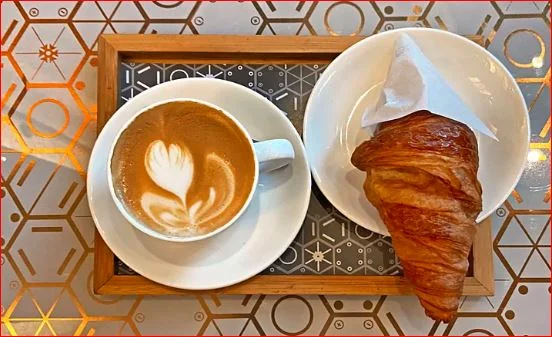
Cappuccino is enjoyed in coffee bars in the morning. Italian breakfasts are light, usually consisting of a croissant or a pastry, which go very well with a smooth, creamy cappuccino.
But this frothy milk drink is considered too heavy to have with fuller, savory meals. That’s why Italians are surprised when someone tries to order it for lunch or dinner.
When Italians drink coffee after the first meal of the day, they usually choose an espresso or a macchiato.
2. Don’t change the order of the courses
Like a symphony, meals in Italian restaurants unfold in a set order:
- antipasto (appetizer or starter),
- primo (first course, usually pasta),
- secondo e contorni (main course of meat or fish and seasonal vegetables as a side),
- dolce (dessert),
- caffè e amaro (coffee and a digestif).
This order allows flavors to build gradually, from the lightest to the richest, ending with a dose of caffeine or alcohol to aid digestion.
You can skip some stages of the meal, but you shouldn’t change their order.
Contorni (side vegetables) are served on separate plates. Asking “bring everything at the same time” is considered very unusual in Italy.
In Italy, salad (insalata mista) isn’t served at the beginning of the meal. It usually comes as a side with the meat main course and consists of mixed greens dressed with olive oil, salt and lemon juice.
In simpler restaurants, some dishes such as ribollita (a traditional Tuscan soup with bread and vegetables) or pasta e fagioli (pasta with beans) may be considered first courses.
Pasta isn’t a garnish or a side dish – it’s a dish in its own right.
3. Don’t mix the sea with the mountains
“But why can’t I have Parmesan on my seafood if I like it?”
In Italy, it is generally thought that “mare” (seafood) and “monti” (cheese and meat) represent different culinary traditions. They developed separately, and the custom of keeping these ingredients apart has continued over the years.
It is believed that their distinctive flavors may compete with each other, which is why seafood is rarely paired with hard, aged cheeses.
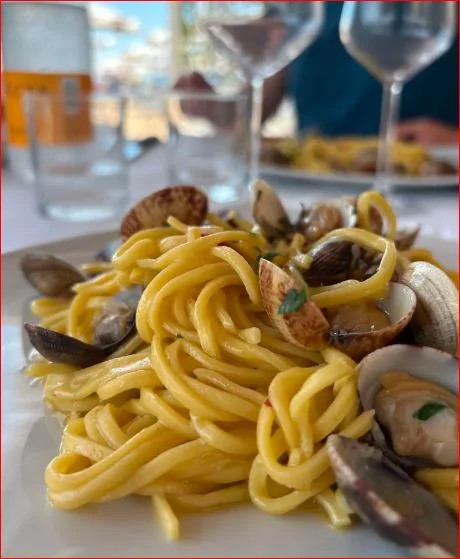
You wouldn’t mix these flavors even during a meal. For example, an insalata di mare (seafood salad) might be followed by spaghetti alle vongole (spaghetti with clams) and frittura di calamari (fried calamari), but not by fettuccine alla bolognese and roast pork.
You can also find dishes on Italian menus that deliberately combine seafood and cheese, such as pasta con cozze e pecorino (pasta with mussels and pecorino cheese).
However, these are recipes endorsed by tradition. The general rule is to keep these two culinary worlds separate.
For this reason, if you ask for Parmesan on spaghetti alle vongole, the Italians around you are likely to react with surprise.
4. Don’t ask for substitutions in dishes
Sorry, but in Italy restaurant dishes usually aren’t customized to suit the customer’s wishes.
Certain ingredients traditionally go together – or don’t (as in the case of “sea and mountains”).
Short pasta shapes are usually paired with thicker sauces, which cling better to their ridges and shapes, while long or filled pasta usually goes with smoother, creamier sauces.
In Italy, it isn’t customary to ask for a dish to be prepared with a different ingredient. This is seen as an affront to the character of the dish and the chef’s professional judgment.
It’s perfectly fine to mention your allergies or dietary needs, and to ask whether an ingredient that may upset your stomach (such as onions, peppers, tomatoes or garlic) can be left out of the dish.
Many chefs will be happy to prepare something special to suit your needs.
What isn’t looked upon favorably is reshaping a traditional dish according to personal preference.
- Don’t stick to just one region
Outside Italy, restaurants serve what is called “Italian food”. But the very concept of “Italy” didn’t exist until the late 1800s, when a patchwork of kingdoms and independent states united into a single country.
Italian cuisine is also extremely regional. Italians value local dishes and products as precious treasures. For them, visiting an Italian city without trying its famous local foods would be a missed opportunity.
Would you visit Cornwall and not try the traditional pasty?
Italian regional foods are remarkably varied, and discovering them is part of the pleasure of travel.
A short guide:
- Go to Naples to try pizza in its birthplace.
- Then travel south to enjoy limoncello, made with the famous lemons of the Amalfi Coast.
- Pesto originated in Genoa.
- For cacio e pepe and carbonara, head to Rome.
- Florence is known for its thick, juicy Florentine-style steaks.
- While Venice is the hub of aperitivo culture, which takes place in bacari (traditional bars) with cicchetti (small, tapas-like snacks) and glasses of Aperol Spritz.
- But this is just the tip of the delicious “iceberg” of Italian cuisine. Every village and town has a famous dish, a distinctive bread or a treasured traditional fruit.
- Before you order, ask what the area is known for.
· 6. Don’t rush
- Eating in a restaurant in Italy is a social ritual, not simply a way to fill your stomach.
- Thanks to the leisurely way several courses are served, lunch or dinner can last for hours. This creates space between courses, sometimes even for a sorbetto al limone (lemon sorbet) to cleanse the palate.
- The waits between courses are filled with lively conversation. Italians laugh, discuss things and pour a little more wine.
- If you go out for dinner at the time Italians eat, usually after 9:00 p.m., expect the meal to end close to midnight.
· 7. Don’t skip the amaro
- The end of an Italian meal is marked by something sweet, coffee (espresso or macchiato, of course) and an amaro.
- The word amaro literally means “bitter”. It is usually made with citrus peels, nut husks or medicinal herbs.
- Although amaro is an acquired taste, there’s nothing better to help you feel normal again after a hearty meal.
- Amari vary greatly from one region to another, so ask about the local specialty or, even better, whether they have a homemade version.
- Sip slowly, savor the moment and get ready for another culinary adventure tomorrow./BBC














