
All Roads Lead to Madrid: Why the Spanish Capital Became the World’s Meeting Point Last Weekend
Formula 1 cars, music from ZAMNA and LAP57, and the start of Fashion Week turned the Spanish capital into a meeting point for sport, music and style. From reducing plastic to a “smoke-free” culture, the festival opened a discussion about the environmental impact of major events. Beyond attendance figures, the success of future events […]
Formula 1 cars, music from ZAMNA and LAP57, and the start of Fashion Week turned the Spanish capital into a meeting point for sport, music and style.
From reducing plastic to a “smoke-free” culture, the festival opened a discussion about the environmental impact of major events.
Beyond attendance figures, the success of future events will also be measured by what they leave behind.
A Formula 1 race, festivals featuring international names in electronic music, and a city getting ready for the fashion runways. If Madrid has been appearing repeatedly on your social media feeds these days, its calendar explains why. The weekend of September 11–13 brought together several events that drew international attention.
Formula 1 was one of the main reasons. The Spanish Grand Prix took place at the MADRING circuit, with the final race on Sunday, September 13. Over the three days, practice sessions, qualifying and the race put Madrid at the center of motorsport fans’ attention. Formula 1
Music, meanwhile, had a program all its own. On September 12, LAP57 – Madrid Race Week brought artists such as Marco Carola, ANOTR and PAWSA to the Universidad Autónoma de Madrid. Immediately after the weekend, on September 14, Mercedes-Benz Fashion Week Madrid began, running through September 19 and shifting attention to the runways and new collections. LAP57, Fashion Week
ZAMNA, music and the conversation about the impact of future festivals

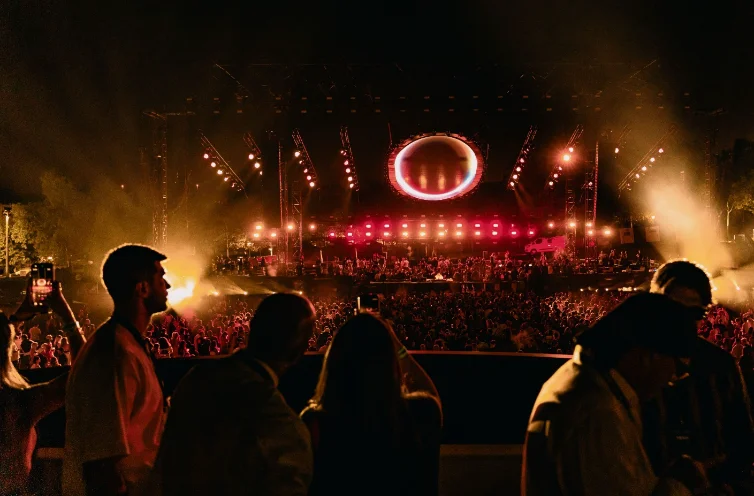
For electronic music fans, one of the stops was ZAMNA. On September 11, at the Universidad Autónoma de Madrid, Black Coffee headlined the program alongside AMÉMÉ, Argia, Avangart Tabldot and Pablo Fierro. ZAMNA
The festival experience also reached Albanian audiences through social media. Among the attendees were several well-known figures from Albanian show business, including Krist Martiro. Martiro shared a reel with his impressions of the experience: the music, the attendance, the atmosphere and ZAMNA’s approach as an innovative and “responsible” festival.
In his account, Martiro focused on reducing plastic use, energy efficiency and sustainable transport. He also discussed the “smoke-free” concept, as well as the influence major brands have on how these events are conceived and on their environmental impact.

“Even a smoke-free culture can contribute to a cleaner environment, with less litter and fewer cigarette butts on the ground,” he said in the video shared with his followers.
However, the question Martiro raised goes beyond a weekend in Madrid: how is an event’s success measured after the stage goes dark and the audience leaves?
“The future of events is not just about how many people you can bring together; it’s also about what you leave behind,” he said.
Alina Igritskaya, the brand marketing director for heated tobacco products at Philip Morris International, also spoke about the role of partnerships in creating these experiences during an interview at the media event in Madrid.
“The most powerful partnerships are those built on shared values,” she said, summing up the connection with ZAMNA in three words: “curiosity, creativity and transformation.”
From the adrenaline of Formula 1 to the beats of ZAMNA and LAP57, and then to the runways taking over, Madrid moved from one stage to the next without losing momentum. Sport, music and fashion brought people with different interests to the same city, each with a reason to be there and a story to take home. Amid the races, festival nights and videos filling social media, there was room for a question that lasts beyond the weekend: what do events of this scale leave behind? Madrid offered excitement and memorable moments, but also topics worth continuing to discuss after the music stops.














