46,000-year-old Neanderthal remains discovered in Navarre, Spain
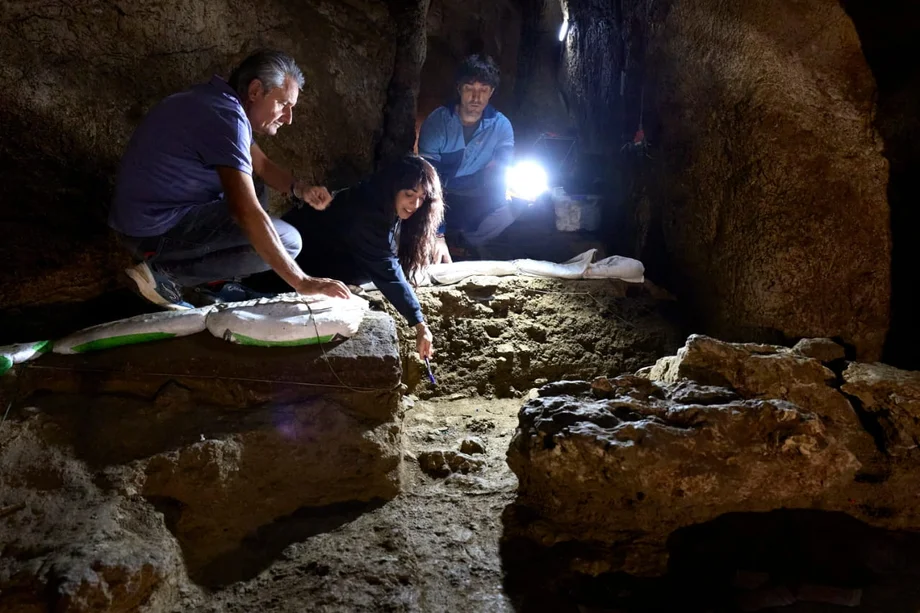
An international team of researchers has identified Neanderthal remains in Navarre, Spain, for the first time. Six bone fragments discovered in Abauntz Cave belong to a male who lived around 46,000 years ago. The discovery was presented on Monday, October 19, at an event also attended by the president of […]
An international team of researchers has identified for the first time Neanderthal remains in Navarre, Spain. Six bone fragments, discovered in Abauntz Cave, belong to a male who lived around 46,000 years ago.
The discovery was presented on Monday, October 19, at an event also attended by the president of the Government of Navarre, María Chivite.
The remains include three bones from the palm of the hand and a middle phalanx of the right hand, as well as two other fragments identified as human through protein analysis. Genetic studies confirmed that they belong to a male Neanderthal.
Some of the bones have bite marks from carnivores, which may help understand what happened to the body after death. Stone tools and animal remains were also found in the same area, some of which showed signs of processing by the human groups that used the cave.
“For the first time, we have human remains that allow us to directly identify the presence of Neanderthals in Navarre,” said Andion Arteaga, co-director of the project.
Researchers have combined ancient protein analyses, genetic studies, and radiocarbon dating to determine the identity and age of the remains. The work is being carried out in collaboration with the University of Vienna and the Max Planck Institute for Evolutionary Anthropology in Germany.
According to the researchers, the discovery is particularly important, since around 46,000 years ago Neanderthals were still living in different parts of Europe. They disappeared from the continent around 40,000 years ago, during a period when Homo sapiens was expanding across Europe.
Abauntz Cave is located in a natural corridor connecting the Iberian Peninsula with the rest of Europe, offering an opportunity to study the movements and possible contacts between ancient human populations.
The project involves more than 25 specialists from various research institutions. Genetic analyses are still underway and are expected to provide further information about the evolutionary history and demographic changes of Neanderthals.
Meanwhile, a new excavation campaign is underway at Abauntz Cave, which could yield further discoveries about the presence of these populations in the western Pyrenees.