Retired admiral: The U.S. ignored lessons from the war in Ukraine
In an interview with Radio Free Europe, retired Admiral Mark Montgomery warns that Russia, China, Iran and North Korea are increasingly coordinating their military, technological and economic resources in order to challenge the West on multiple fronts.
Montgomery served for 32 years in the United States Navy, retiring in 2017 with the rank of rear admiral. From January 2013 to October 2014, he commanded U.S. 7th Fleet Carrier Strike Group 5 aboard the aircraft carrier USS George Washington.
He is now a senior director at the Center on Cyber and Technology Innovation at the Foundation for Defense of Democracies (FDD). Montgomery recently returned from visits to Ukraine and the Middle East.
Radio Free Europe: How are restrictions on the use of Starshield affecting Ukraine’s military operations, and what impact have you observed on the battlefield?
Mark Montgomery: I was there when the outages occurred, but I had a pretty good picture of the situation from the first outage. I spoke with the operators who experienced it and learned about the consequences.
Starshield is extraordinarily important to Ukraine’s war effort. It enables Ukrainians to minimize losses on the front line, as well as among the civilian population.
When Starshield is shut off, for whatever reason, or its speed is restricted to a very low level, in practice it becomes unusable. This has a significant negative impact on Ukraine’s military and social resilience.
Radio Free Europe: Russia is stepping up acts of sabotage, GPS signal interference, cyberattacks and other hybrid operations in the region. Is Moscow taking advantage of uncertainty about Western support for Kyiv to open a broader front against NATO?
Mark Montgomery: I think these are two separate issues, but the timing is not a coincidence. [Russian President] Vladimir Putin understands that the U.S. is trying to pressure Ukraine into accepting territorial concessions in order to bring about a cessation of hostilities.
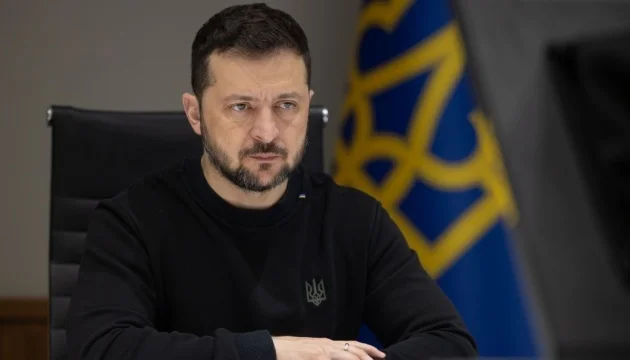
It is clear that these Starshield speed restrictions are being imposed deliberately. I think they are being implemented at the request of the U.S. government as a way to pressure President [Volodymyr] Zelensky.
At the same time, Putin sees this and understands that he needs to pressure Europe so that it, too, does not encourage or support Ukraine in defending its territorial integrity.
This is what Russia calls next-generation warfare, or hybrid warfare. It combines cyberattacks, information warfare, disinformation, economic attacks, drone attacks, and even physical attacks, such as explosions and arson at factories, for example, in Estonia and Poland.
All of this is part of a Russian plan to send Eastern European countries the message that NATO is not a reliable source of support and will not be there for its allies in Eastern Europe. Therefore, according to this message, the war in Ukraine is a mistake.
Radio Free Europe: Is Kyiv actually fighting Russia and its allies, while the West is trying not to fall behind?
Mark Montgomery: Absolutely. Kyiv is fighting four countries.
I am a co-author, with Brad Bowman and Elaine Dezenski, two other FDD researchers, of the book entitled “Axis of Aggressors.” In this book, we document that these four countries — Russia, China, North Korea and Iran — have relationships based on mutual interests and have engaged in at least 700 different instances of military, economic or technological cooperation. The most significant of these is the support each of these countries has given Russia in its war against Ukraine.
It is well known that Iran gave Russia thousands of Shahed drones at the beginning of the war, along with the technical designs to produce other drones in Russian factories throughout the war. This technology was subsequently developed into the Geran-2, Geran-4 and Geran-5 drones, which Russia is using with some success against Ukraine.
North Korea sent 12,000 troops during the Kursk offensive. Since then, it has sent additional troops for engineering work and other tasks, and supplied Russia with six million artillery and mortar shells.
So the country with the world’s second-largest stockpile of artillery and mortar shells has provided the country with the largest stockpile with enough supplies to last for decades.
And China is keeping this entire war economically afloat. It has helped keep the Russian wartime economy functioning, but, more importantly, it has provided the microelectronics that enable Russia to produce cruise and ballistic missiles, which it uses to strike Ukrainian cities at night.
So, without any doubt, Ukraine is fighting against the so-called Axis of Aggressors, namely all four of these countries. Russia may be the one losing soldiers on the front line, but all the other countries are contributing.
Iran’s allies and the expansion of the conflict in the Middle East
Radio Free Europe: Let’s turn now to the Middle East. Is the U.S. facing Iran alone, or is it facing the same network of adversaries supporting Russia in Ukraine?
Mark Montgomery: In the Middle East, I think the U.S., its Arab partners and Israel are fighting Iran, Russia, China and, to a lesser extent, North Korea.
Over the years, Russia and China have provided Iran with weapons and technological support for weapons development. All three countries have provided Iran with varying levels of nuclear support, as Iran tries to develop nuclear weapons. This support includes academic and research cooperation, as well as the provision of materials and technical assistance.
Recently, during the conflict, it has been alleged — and I think there is strong reason to believe it — that China and Russia have provided the Iranians with support to improve the accuracy of drone and ballistic missile attacks against U.S. bases and the infrastructure of Arab countries.
However you assess the situation, the U.S. is fighting all of these countries.
Radio Free Europe: How effective has Washington’s strategy to weaken the Iranian regime been?
Mark Montgomery: There is resilience within the regime. I think it has survived because the U.S. campaign began with the wrong strategic objective: an attempt at regime change without an armed opposition force on the ground.
You cannot achieve regime change through air power alone. You need armed activists on the ground, as we experienced in Kosovo in 1999 or in Libya in 2011.
I now think the war has taken the form of a campaign to economically strangle Iran. And here I have to give credit to the U.S. administration. Since the end of the ceasefire memorandum, in late June or early July, it has shown patience and discipline, maintaining a naval blockade throughout.
The administration has intensified this approach. The Treasury Department has imposed sanctions on Iran’s financial system, while the U.S. has not fallen into Iran’s trap when the latter has fired at ships. In other words, the U.S. has not immediately launched an escalating or even merely proportional counterattack. It has ensured that Arab countries’ oil continues to be shipped through the southern maritime corridor near Oman, in greater quantities than before February 28, while preventing Iranian oil from flowing.
Iran is a highly resilient state, but when you can no longer sell fossil fuels, which make up most of your revenue, the consequences will be felt. Eventually, you will have to change course.
This means either seeking an agreement with the U.S. on its terms, or taking action against the U.S.
I think the [Iranian Islamic Revolutionary Guard] will launch some kind of attack very soon, likely against our Arab partners, in an attempt to force the U.S. to change its approach to the economic strangulation campaign.
Radio Free Europe: Given Houthi activity in Yemen and attacks on infrastructure in the Persian Gulf and U.S. interests in Bahrain, are we seeing Iran try to coordinate pressure on several fronts at once?
Mark Montgomery: Iran is trying to do that, and we probably need to help the Saudis more. Iranian attacks on Bahrain are attempts to provoke the U.S. into retaliating. I think we have carried out attacks over the past few months, but they have been mostly quiet. We have struck targets on Qeshm Island and other islands in the Strait [of Hormuz], as well as at Bandar Abbas air facilities, where there are radars and other electronic surveillance equipment.
The aim is to reduce Iran’s ability to strike friendly tankers passing through the southern maritime corridor, closer to Oman. We have acted with great care and patience while gradually strangling the Iranian economy.
“We ignored Ukraine’s lessons and paid the price”
Radio Free Europe: You mentioned around 700 instances of cooperation between Russia, China, Iran and North Korea. Are these countries sharing tactics learned in Ukraine and now applying them in the Middle East?
Mark Montgomery: We are already seeing some of these tactics being used. First, there is no doubt that China and North Korea are present in Russia, particularly North Korea, which is learning from combat experience there.
Iran has clearly understood the effectiveness of longer-range drones; drones that can travel distances of 60 to 600 kilometers. Shahed drones have been used with some success.
Now, ironically, these drones are also being used successfully at shorter ranges. They have been very effective against Bahrain, Kuwait, Qatar and eastern Saudi Arabia because the West failed to learn the right lessons from Ukraine’s experience.
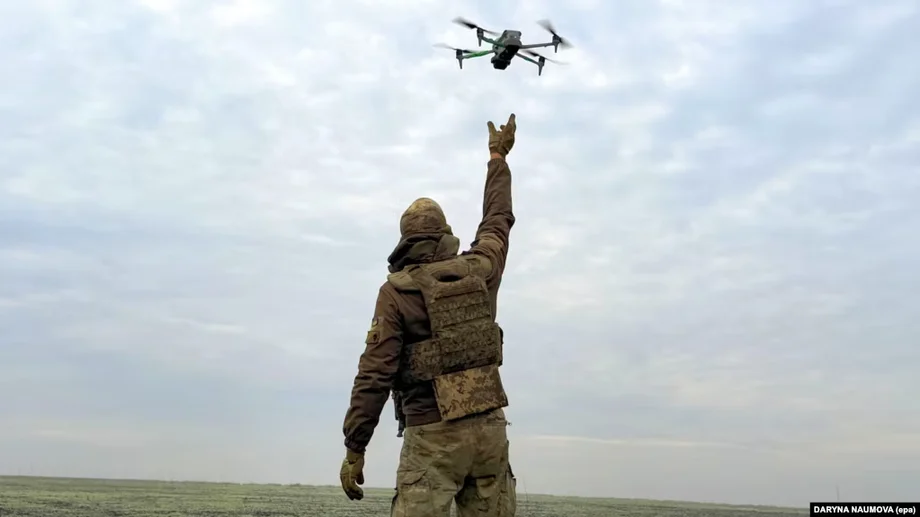
Ukraine has been using ground-based interceptor drones for two and a half years and has presented them to the United States. Yet the U.S. did not take advantage of this experience.
In fact, Zelensky offered these drones to the U.S. in the summer of 2025. The U.S. responded that it did not need them and did not need any help from Ukraine.
We could have taken advantage of that assistance. As a result, we were not prepared for these kinds of short-range attacks.
We do not have major problems shooting down drones heading toward Jordan, Israel or western Saudi Arabia, because we can position aircraft behind them and shoot them down.
But when it comes to very short-range attacks from Iran toward Bahrain, Qatar, Kuwait, the United Arab Emirates and eastern Saudi Arabia, the flight time is very short. Our aircraft do not have time to get into position. That is why we need these ground-based interceptor drones.
Radio Free Europe: Are you saying that Ukrainian anti-drone technology could significantly reduce damage to U.S. and allied facilities, and potentially even shorten the campaign against Iran?
Mark Montgomery: Absolutely. I would even go so far as to say that the reason we stopped the air campaign after 40 days was that we failed to sufficiently neutralize the drone threat in the Persian Gulf: Bahrain, Kuwait, Qatar and eastern Saudi Arabia.
These drones caused considerable damage to U.S. facilities and our partners’ infrastructure.
This could have been completely avoided if the U.S. military had learned from the Ukrainian military over the past two and a half years.
But it chose not to. It ignored the opportunities offered to it. It ignored the lessons learned on the Ukrainian battlefield.
As a result, an air and naval campaign that was otherwise effective — I mean, it would not have achieved regime change, but it was imposing considerable costs on Iran — had to be halted because we could no longer provide that level of air defense against drones.
Radio Free Europe: Looking at the situation as a whole, is Washington still preparing for the wars of the past, while its adversaries learn from one another and coordinate their actions on different fronts?
Mark Montgomery: The problem is that our adversaries are cooperating everywhere.
We cannot ignore Iran’s nuclear problem. We cannot ignore Russia’s invasion of Ukraine and its attacks in Eastern Europe through next-generation warfare. We cannot ignore China’s pressure on Taiwan. All these issues are interconnected.
Cheap drones make the difference in fighting in Ukraine
Let me give you one more recent example. Because of the support they have given Russia, China and North Korea have received very high-quality support in return.
Russia is said to have given China technology for reducing submarine noise. This is one of our most important advantages and enables China to threaten our greatest asymmetric advantage: our undersea warfare capabilities.
China has also received from Russia training in airborne assaults by troops, to better prepare it to carry out an airborne landing as part of an invasion of Taiwan across the strait.
Recently, North Korea has received from Russia what is described as space technology, but we all know that it is actually intercontinental ballistic missile technology, which enables it to strike more targets in the U.S. and with greater accuracy.
This war between Russia and Ukraine has brought the Axis of Aggressors closer together to an extent we could not have imagined five years ago.