Freedom of Expression Is Non-Negotiable
There is something profoundly dangerous when people who claim to represent the state, or act as if they are above it, decide to replace the law with threats, insults and a logic of revenge. Instead of debating, making arguments or responding to journalists with facts, they choose public vilification, labeling and pressure. When they do not like the words, they seek to […]
There is something profoundly dangerous when people who claim to represent the state, or act as if they are above it, decide to replace the law with threats, insults and a logic of revenge. Instead of debating, making arguments or responding to journalists with facts, they choose public vilification, labeling and pressure. When they do not like the words, they seek to punish the person who says them. When criticism bothers them, they try to turn the journalist into an enemy. This is not merely arrogant behavior. It is a mentality that endangers freedom and democracy.
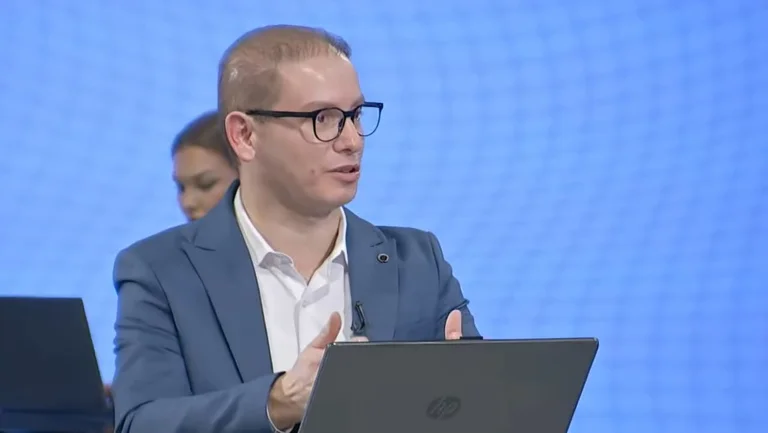
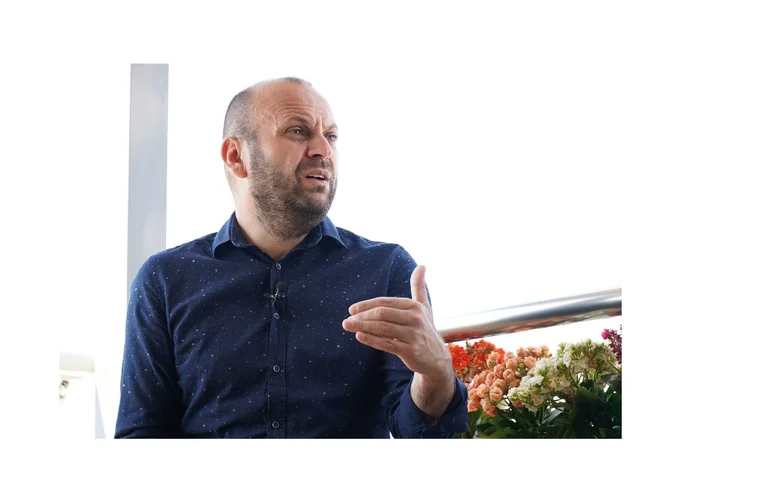
The recent cases involving Fidan Jupolli and Lirim Mehmetaj are a wake-up call for society as a whole. Jupolli has faced insults, labeling and threats following his public statements about political developments and protests in support of former KLA leaders. Meanwhile, the case of Mehmetaj, who reported threats after publishing a critical article, took on even more troubling proportions when former MP Gani Geci went to the television station where the journalist was. These are not matters that can be treated as ordinary disputes between individuals. When a journalist is threatened for doing his job, the public’s right to be informed is also affected.
It is irrelevant whether someone agrees with journalists’ views. It is irrelevant whether a journalist is harsh, ironic, provocative or even unfair in some assessment. The fundamental question is: do we want to live in a society where public speech is answered with arguments and the law, or in a society where anyone who feels insulted thinks they can settle the score however they please?
Journalists are not untouchable. They are not above the law, they are not infallible, and they are not immune from criticism. On the contrary, their work should be subject to critical scrutiny by the public. But there is a major difference between criticism and threats, disagreement and intimidation, demanding accountability and trying to silence someone else.
If a journalist violates the code of ethics, spreads inaccurate information or infringes on someone’s rights, there are appropriate mechanisms for addressing this, depending on the nature of the violation. There are rights of reply, corrections, complaints and legal procedures. Anyone who believes they have been harmed by a journalist’s work can use these avenues. This is how a state that claims to be democratic functions.
But what happens when these avenues are bypassed and someone thinks a post, a comment or a broadcast can be dealt with through threats? Then we are no longer dealing with an ordinary disagreement, but with an attempt to impose one’s will through fear. This is precisely what a state governed by the rule of law must not tolerate.
* * *
The situation becomes even more troubling when attacks on journalists are encouraged or legitimized by figures in power. A politician who uses their position in an attempt to delegitimize the media, label journalists as enemies or portray them as part of some sinister agenda is not merely engaging in bad politics. They are helping create a climate in which their supporters may consider it acceptable to threaten those who think differently.
Those in power need to understand one elementary thing: the media are not their departments, journalists are not spokespersons, and newsrooms are not public-relations offices for political parties. Journalists’ job is not to make those in power feel good, preserve their image, or, much less, shield them from uncomfortable questions. Their job is to inform, ask questions, investigate and criticize when they consider it necessary.
Of course, journalism must be professional and responsible. But professional responsibility cannot be turned into a pretext for political submission. Journalists cannot be expected to be free only when they praise, and declared enemies when they criticize. Freedom of expression is not a privilege that those in power grant the media according to their daily mood. It is a fundamental right, guaranteed by the Constitution, and it is not negotiable in accordance with anyone’s interests.
Neither the Kanun, nor the logic of chieftains, nor the mindset of those who believe that a phone call, a threat or showing up at a television station’s door is enough to settle a conflict can take the place of the law. Kosovo does not need people who act as if they can take justice into their own hands; it needs institutions that act without selectivity, fear or political distinctions.
Therefore, cases of threats against journalists should not remain merely matters of solidarity within their community; they should be a test for the institutions: are they capable of protecting a citizen from threats, even when that citizen is critical of those in power or of influential people? The police and prosecution must treat these cases seriously, while justice must be served on the basis of evidence and the law.
All of this comes down to what kind of society we want to build: a society where speech is countered with speech, or one where speech is punished with fear? A state where the law applies to everyone, or one where anyone with power, connections or supporters thinks they can make the law themselves?
Journalists must be left free to do their work. Anyone with objections should counter them with arguments and turn to the appropriate mechanisms. But no one has the right to threaten a journalist simply because they do not like what the journalist says or writes. Because when those in power and the powerful decide to silence journalists, they are not protecting their own dignity; they are infringing on everyone’s freedom. A democracy that allows scores to be settled through the Kanun instead of the law has begun a dangerous journey toward denying itself.