How the BIA Became Involved in Gathering Votes for the SNS in Kosovo and Serbia
Fehim Sali’s communications with a Serbian intelligence official about gathering votes from Kosovo’s Gorani community, and the criminal complaint filed on November 2, 2026, against BIA Director Vladimir Orliq and seven other senior officials in Serbia, present two developments linking the Serbian intelligence service to the organization of electoral support for the […]
Communications between Fehim Sali and a Serbian intelligence official about gathering votes from Kosovo’s Gorani community, and the criminal complaint filed on November 2, 2026, against BIA Director Vladimir Orliq and seven other senior officials in Serbia, present two developments linking the Serbian intelligence service to the organization of electoral support for the Serbian Progressive Party (SNS). In the first case, Sali reported on people who agreed or refused to support the SNS, while in the second, BIA officials are accused of imposing the gathering of votes for the same party as a work requirement for intelligence personnel.
The connection between these cases raises an issue that goes beyond ordinary electoral organization, because the involvement of intelligence structures in identifying political supporters and opponents creates opportunities to collect information, exert pressure, and expand influence networks. For Kosovo, where data on citizens’ political views was reported to a BIA official, this activity also takes on a national security dimension and constitutes hybrid influence through electoral mechanisms.
Gathering votes for the SNS through ties to the BIA
In the audio recording published on September 4, 2026, Fehim Sali explained to Zhelimir Matoviq, identified by Kosovo’s Special Prosecution as a BIA official, how signatures in support of the SNS were being gathered. He mentioned documents given to him by a person called “Nikolla” and the fact that he had separately marked the names of those who had said “NO,” turning their refusal to provide political support into information to be reported.
In electoral activity, lists are used to identify and mobilize voters, but recording those who refuse is also a way to map political views within the community. When this information is passed on to a foreign intelligence official, it is no longer limited to party organization, as it can be used to identify influential people, understand social relationships, and select individuals who could be subjected to pressure.
In the same communication, Sali mentioned using “beatings” to secure electoral support, sending documents to Belgrade, and worrying that the materials might be discovered while crossing the border. These details link the gathering of votes to methods of pressure and the cross-border movement of data, shifting attention away from the number of signatures and toward the people who requested them, managed them, and received the lists.
For Kosovo’s security, the issue is not citizens’ support for a political party, but the recording of their views and the reporting of this information in communications with a foreign intelligence service. This distinction is also essential to protecting the Gorani community from political pressure and the instrumentalization of community relations.
“Moja Gora” and organization through local contacts
One part of the case’s organizational dimension concerns the association “Udruženje Moja Gora,” registered in Serbia on April 2, 2024, under number 28379404. A check of public registries, cross-referenced with data from CompanyWall, identifies Fehim Sali as its representative. The association has been mentioned in reports about gathering Gorani support for the SNS during 2024.
Sali’s connection to this organization broadens the inquiry from individual communications with the BIA to the contacts and structures through which electoral mobilization may have been organized. Community networks have knowledge of local relationships and access to individuals, so they can be used as intermediaries for political mobilization, while information gathered through them also serves an intelligence function when passed on to intelligence structures.
Sali’s reported activity is linked to both 2024 and the 2026 electoral preparations, making apparent the possibility that the same people, forms, and communication channels were used in both periods.
Complaint against Orliq and the political use of intelligence
On November 2, 2026, lawyer Ivan Niniq filed a criminal complaint with the Organized Crime Prosecution Office in Belgrade against BIA Director Vladimir Orliq and seven other senior agency officials. According to the criminal complaint, at the end of May, employees of the agency’s offices in Belgrade, Kragujevac, Smederevo, and Paraćin had been compelled, through their superiors’ authority, to gather so-called “capillary votes” for the SNS using party forms.
Capillary votes are a method for identifying potential supporters in advance and reporting their commitment through an electoral network. The importance of the complaint lies not in political organizations’ use of this method, but in the allegation that gathering support for the SNS was imposed on intelligence personnel as a work requirement, putting the staff and hierarchy of a state institution at the service of electoral interests.
Before being appointed head of the BIA in June 2024, Orliq had been a senior SNS official and Speaker of the National Assembly of Serbia. This political connection is part of the context of the complaint, which calls for scrutiny of how the powers and subordination relationships within the service he heads were used.
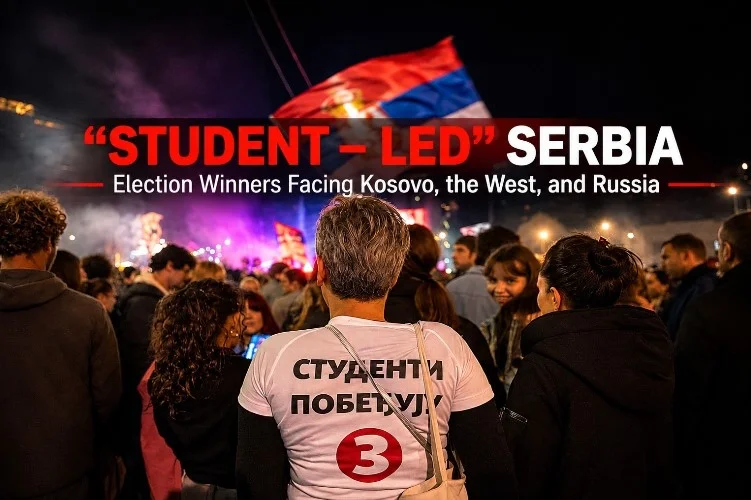
The criminal complaint became public after Serbia’s parliamentary elections on October 25, 2026, in which, according to preliminary results, the Student List received 52.71 percent and the list led by the SNS 39.17 percent. In its assessment of October 26, ODIHR noted the misuse of state resources and electoral pressure. These findings describe the electoral environment, while the complaint against BIA officials separately raises the issue of intelligence involvement in party mobilization.
The Sali and Orliq cases: from electoral organization to hybrid influence
The case of Fehim Sali in Kosovo and the criminal complaint against Vladimir Orliq in Serbia are linked by a shared activity: the organized gathering of electoral support for the SNS with the involvement of BIA structures. In Kosovo, Sali collected signatures, recorded people who refused to provide support, and reported this information to Serbian intelligence official Zhelimir Matoviq, while in Serbia, according to Niniq’s complaint, BIA officials had tasked agency employees with gathering so-called “capillary votes” using SNS forms. The complaint against Orliq thus gives Sali’s activity a broader institutional dimension, since it indicates that the practice of gathering party support, documented in communications between Serbian intelligence and individuals in Kosovo, was allegedly also carried out within the agency’s structures in Serbia.
From the perspective of hybrid warfare, the significance of this connection lies in the use of electoral mobilization as a mechanism for collecting information and exerting political influence. Lists of supporters and people who refused did not represent only data on the SNS’s electoral potential, but also information about political orientations, community relationships, and individuals who could become targets of pressure. Intelligence involvement in this process creates the possibility that information collected for party purposes could also be used for political profiling and the expansion of influence networks, intertwining electoral interests with the information-gathering capabilities of a state institution.
For Kosovo, this activity is a direct security concern, because collecting political information about its citizens and reporting it to the BIA creates scope for external influence over community relations and political processes. Kosovo’s institutions should therefore establish not only who organized the gathering of votes, but also the chain through which the lists were managed and passed on, the relationships with Serbian intelligence structures, and the possible use of this data to exert political pressure.
The strategic significance of the two cases extends beyond the elections and their results, since contact networks and the information collected may retain their value even after political changes in Serbia. The intertwining of electoral organization with intelligence activity creates an influence mechanism that can be used at different times and for other political objectives. For Kosovo, identifying and neutralizing this mechanism is a matter of protecting sovereignty and institutional resilience against hybrid interference by Serbian intelligence.