“How Did Our Society Begin to Worship the Ignorant?”
Have we reached a point where our society values people who make noise more than those who have knowledge?
Do we live in a time when a person can gain hundreds or thousands of followers without making any significant intellectual contribution, while a scientist, teacher, researcher or scholar has to fight for the public’s attention?
Why can a superficial statement get thousands of likes, while a well-reasoned opinion, scientific research or serious analysis often goes almost unnoticed?
Once, knowledge, experience, wisdom and character were considered among a person’s most important qualities.
Today, attention, fame, wealth, appearance and the number of followers are increasingly used as indicators of success and social significance.
There is nothing wrong with people becoming famous. The problem begins when fame is confused with wisdom, popularity with competence, and self-confidence with intelligence.
Many of those who claim to be wise have great confidence in the knowledge they claim to possess, but when asked to explain their beliefs, they often failed to defend them with sound arguments.
Here lies a great lesson: a person who does not understand how little they know, or does not know that they do not know, can be far more dangerous than someone who admits they do not know.
Awareness of the limits of human knowledge is the foundation of a civilized society—the kind of society we claim to be. A life without reflection and critical self-awareness is not a life fully lived.
Wisdom begins with awareness of our ignorance.
A wise person is not afraid to say, “I don’t know.” They are willing to learn, listen, investigate and change their minds when confronted with stronger arguments.
An arrogant person, meanwhile, often sees a question as an attack, criticism as an insult, and disagreement as a threat.
Today, this distinction is particularly important.
In our society, we often encounter individuals who speak with absolute certainty about politics, economics, science, history, medicine and almost every other field, even when they lack the necessary knowledge.
The problem is not that people have opinions. We all have the right to have opinions.
The problem is when personal opinion is presented as fact, when ignorance is masked by self-confidence and when refusing to learn is considered a sign of strength.
The goal is not to know everything; on the contrary, we must have the courage to understand how much we still have to learn.
Let us look at the reality of our society.
Today, fame has become a kind of social currency.
A person can become famous because of a provocative video, a scandalous statement, unusual behavior or a public conflict.
They do not need to have created anything important or contributed to science, culture, education or social development.
All they have to do is attract attention.
This creates a paradox in modern society: people who have a lot to say often go unheard, while those who have little to offer dominate the public sphere.
Think of a university professor who has spent decades studying, researching and publishing.
Now, on the other hand, think of someone who becomes famous overnight through a few-second video.
Which of them gets more attention?
In many cases, the answer is clear.
But does that mean the more famous person is also more valuable to society?
Of course not.
Here we must distinguish between a very important concept: visibility is not the same as value, and fame is not the same as merit.
A society that measures people mainly by their number of followers, wealth or popularity risks overshadowing genuine human values.
Knowledge takes years of work. Wisdom requires experience and reflection. Character requires integrity and responsibility.
Fame, meanwhile, can come within a few hours.
This does not mean that every famous person is ignorant or that every academic is wise. Neither fame nor academic titles should prevent us from judging an individual on the basis of their arguments and actions.
But the question we should ask ourselves is:
Why are we rewarding attention so much and contribution so little?
If society starts rewarding those who entertain more than those who educate, then our collective priorities, too, begin to change.
Social media has accelerated this phenomenon in an extraordinary way.
Platforms such as Facebook, Instagram, TikTok and YouTube have created a space where anyone can become a content creator and gain a large audience. This is a positive opportunity to democratize information.
However, there is another side to it.
Digital platforms often reward content that generates a great deal of attention. This can favor provocative videos, conflicts, scandals and emotional statements.
In-depth content that takes ten minutes to understand may be less successful than a video offering a simple answer to a complex problem.
This creates a culture of rapid information consumption.
People get used to receiving immediate answers without making the effort to understand the causes, context and consequences of a problem.
Instead of asking, “Is this true?” we start asking, “How many likes has it received?”
Instead of asking, “Does this person have knowledge and experience?” we ask, “How many followers do they have?”
Instead of evaluating the argument, we evaluate the person presenting it. This is a very serious shift in the way we form our judgments.
Researchers have examined the relationship between people’s level of skill and their assessment of their own abilities.
The finding is that there is a tendency for individuals with limited knowledge or ability in a given field to overestimate their abilities, while more competent individuals may be more aware of the complexity and limits of their own knowledge.
In other words, the research talks about people “who don’t know that they don’t know,” and those “who don’t know that they know.”
We must be careful: this effect does not mean that every ignorant person is arrogant or that every expert doubts themselves.
But it helps us understand why excessive self-confidence can sometimes seem more convincing than genuine competence.
On social media, this phenomenon can be especially visible.
An individual may give health advice without medical training, comment on the economy without economic knowledge, or issue historical verdicts without having studied history.
And if they communicate confidently and use persuasive language, they can create the impression of being an expert.
The danger is not only the spread of ignorance. The danger is when ignorance gains public authority and starts to be perceived as knowledge.
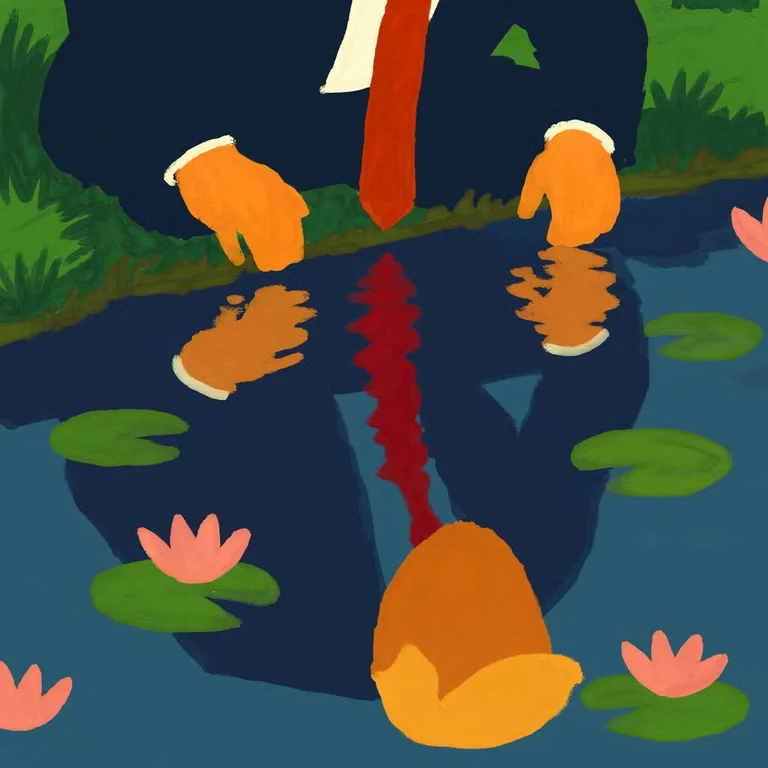
Why does society begin to worship the wrong people?
There are several reasons why society may give excessive attention to individuals who do not necessarily have great intellectual merit.
First: People are drawn to what is easy and entertaining.
Reading a scientific study requires concentration and effort. Watching an entertaining video takes far less mental energy.
There is nothing wrong with entertainment. The problem arises when entertainment becomes our main source of information and of shaping our beliefs.
Second: We tend to admire people who appear successful.
Wealth, luxury clothing, expensive cars and a publicly displayed lifestyle can create an impression of superiority.
But material success is not evidence of intelligence, morality or wisdom.
A person can be very rich and at the same time have a marked lack of social responsibility. In the collective mindset, material success has begun to be equated with intellectual and moral worth. People think: “If this person has managed to become so rich and famous, they must know something I don’t.” This is a false starting point. Wealth may result from luck, manipulation of algorithms or exploitation of banality, but it is never a guarantee of wisdom or integrity.
Third: The oversimplification of reality. People often prefer simple answers to complex problems.
Politics, economics, education and social relations are complicated issues.
The ignorant person offers black-and-white answers, magic solutions and immediate culprits. Nevertheless, people who offer quick answers, grand promises and easy solutions can gain more support than those who explain reality with nuance and arguments. A genuine expert often speaks with uncertainty, using terms such as “it depends” or “possibly,” because they understand complexity.
Unfortunately, the masses often prefer a simple and certain lie to a complex and uncertain truth.
Fourth: Society sometimes confuses courage with arrogance.
A person who speaks loudly, interrupts others and refuses to accept any criticism is often wrongly perceived as strong.
Meanwhile, a person who listens, analyzes and carefully considers their words may be perceived as insecure and weak.
But wisdom does not need to shout.
Often, the wisest person in a room is the one who listens most, asks better questions and speaks only when they have something worthwhile to say.
What are the consequences for democracy, education and the future of our society?
This issue is not merely a cultural problem. When a society begins to be led by the opinions of the highly self-confident ignorant, the consequences are not merely cultural, but existential.
It has direct consequences for how society functions.
Important public decisions start to be made on the basis of the popularity of ideas, not proven facts, leading to the erosion of the social and political system. A healthy democracy requires informed citizens who can analyze arguments, distinguish facts from propaganda and make responsible decisions.
If citizens value a politician only because of their popularity, rhetoric or public spectacle, there is a risk that competence and integrity will lose importance.
A society that does not value knowledge becomes more vulnerable to manipulation.
In education, the risk is just as great.
If pupils and students are taught only to repeat information, rather than analyze it, then education risks producing people who know how to give answers but not how to ask questions.
University should not simply be a place where people obtain degrees. It should be a place where ideas are challenged, critical thinking is developed, and the search for truth is placed above personal interests. The younger generation begins to see education and research as a waste of time, given that “success” can be achieved more quickly through digital scandals.
Ignorance is fueled by primitive emotions such as fear and hatred, making rational dialogue almost impossible and creating the conditions for extreme polarization.
Here we should also remember another lesson.
Today, people are condemned, denounced and smeared not because they lack intellectual influence. On the contrary, it is because they become inconvenient for a small part of society, as they continually confront and challenge particular interest groups.
The past reminds us that our society does not always reward people who seek the truth.
And not infrequently, such a society opposes precisely those it most needs to hear.
How can we restore respect for knowledge and wisdom?
If we have reached a point where fame is valued more than knowledge, then we must ask ourselves: how can we change this reality?
There are several steps, not easy in practice, but possible.
– Restore respect for knowledge. Promote the rewarding of merit.
We must value teachers, scholars, scientists, professionals and everyone who contributes to society’s development. As consumers of content, we hold the most valuable “currency” today: our attention. We must take our attention away from the ignorant and give it to creators of genuine value.
– Learn to distinguish fame from competence.
The number of followers is not a degree. Popularity is not expertise. Self-confidence is not proof of intelligence.
– Develop a culture of questioning and cultivate doubt.
Let us not be afraid to ask: Who is saying this? What evidence is it based on? Are there alternative arguments?
– Cultivate intellectual humility.
Let us accept that we can be wrong. Let us understand that no one knows everything and that learning never ends. We must regain the courage to say, “I don’t know,” and value those who investigate before they speak.
– Become more responsible in our use of social media and strengthen media literacy.
We must learn, and teach our children, how to filter information, recognize fake news and avoid confusing the algorithm with the truth.
Let us not reward every piece of content simply because it is provocative or entertaining. Let us support content that educates, informs and encourages reflection.
A wise society is not one in which everyone claims to know everything. It is one in which people value knowledge and are not ashamed to admit what they do not know.
A society that admires noise risks losing its wisdom.
We must ask questions, doubt, analyze and accept nothing simply because it is popular or because someone in authority says it.
Modern society has made extraordinary technological progress, but technological progress does not automatically guarantee intellectual and moral progress.
We may have smartphones, but that does not mean we have wise thoughts.
We may have millions of pieces of information, but that does not mean we have knowledge.
We may have millions of followers, but that does not mean we have values.
We may be very famous, but that does not mean we have contributed anything important to society.
A society begins to lose its wisdom when it stops admiring knowledge and starts worshipping ignorance dressed up as self-confidence.
We should not admire people just because they are famous, rich or loud.
We should admire those who think, research, create, learn, contribute and have the courage to defend the truth.
A society does not need more people who claim to know everything.
It needs more people who want to learn and have the courage to think.
Ultimately, the biggest problem is not that ignorant people exist in society. The problem begins when ignorance becomes a model of success, arrogance becomes a model of leadership and fame becomes a substitute for wisdom.
Ignorance has always been present in human history, but today it has found a powerful loudspeaker: technology and the culture of instant fame. Yet a society cannot survive for long on the foundations of noise and superficiality.
Let us not become accomplices in worshipping the ignorant. Let us be the ones who restore wisdom, reasoned thought and the thirst for knowledge to their rightful place. Because, ultimately, civilization is not built on the number of followers, but on depth of thought and strength of character.
Prof. Dr. Afrim Blyta, neuropsychiatrist
From the speech on the occasion of the 24th anniversary of the “Jakova” Intellectuals’ Association,
Gjakova, November 2026.